


Master Coffee Extraction Time: Stop Under-Brewing at Home

Sour, watery coffee often needs more time to brew so the water can draw out sweet sugars and rich oils. With locally roasted whole bean coffee in Staten Island, a short brew leaves behind flavors you paid for. The sharp organic acids come through without enough sweetness to balance them.
Most home brewers blame sour coffee on brewing too long, but the problem is usually the opposite. Water needs enough time with the grounds to draw out the caramelized sweetness. Without it, you get a weak cup that leaves you foggy by afternoon and reaching for artificial energy fixes.
What's Inside This Guide
- Why Does Your Morning Cup Taste Sour and Grassy?
- How Do You Dial In Extraction Time Across Standard Home Brewers?
- How Do Immersion and Percolation Extraction Timers Differ?
- How Long Should Functional Mushroom Coffee Extract for Maximum Mental Clarity?
- What Are the Most Common Contact Time Mistakes to Avoid?
- How Does Staten Island Tap Water Chemistry Shift Your Target Brew Time?
- Straight Answers on Extraction and Performance Coffee
- Dialing In Your Morning Cup with Teddy Outdoors
Why Does Your Morning Cup Taste Sour and Grassy?
Under-extraction means the water hasn't drawn enough flavor from the grounds. Coffee compounds dissolve in order: sour acids come first, followed by sweet sugars, then bitter plant fibers. Stop brewing too early and those first acids dominate, without the sweetness that would balance your cup.
That imbalance spoils the delicate flavors in functional roasts, which contain added ingredients such as mushroom extracts. Even good specialty coffee beans can taste like lemon rind and salted grass after a short brew. The coffee also loses body, leaving a watery feel rather than a rich texture.
Some remote workers and morning hikers around Staten Island cut brewing short because they want to avoid bitterness. Instead, they get a puckering sourness that irritates digestion and starts the morning badly. Just thirty more seconds of contact with the water turns that harsh acidity into balanced sweetness.
How Do You Dial In Extraction Time Across Standard Home Brewers?
Match your grind size to the way your brewer holds water against the coffee. Fine grounds expose more surface area, so flavor comes out quickly. Coarse grounds need a longer soak to produce a balanced cup.
Video: Dero_De_Barista explains how brew time affects espresso.
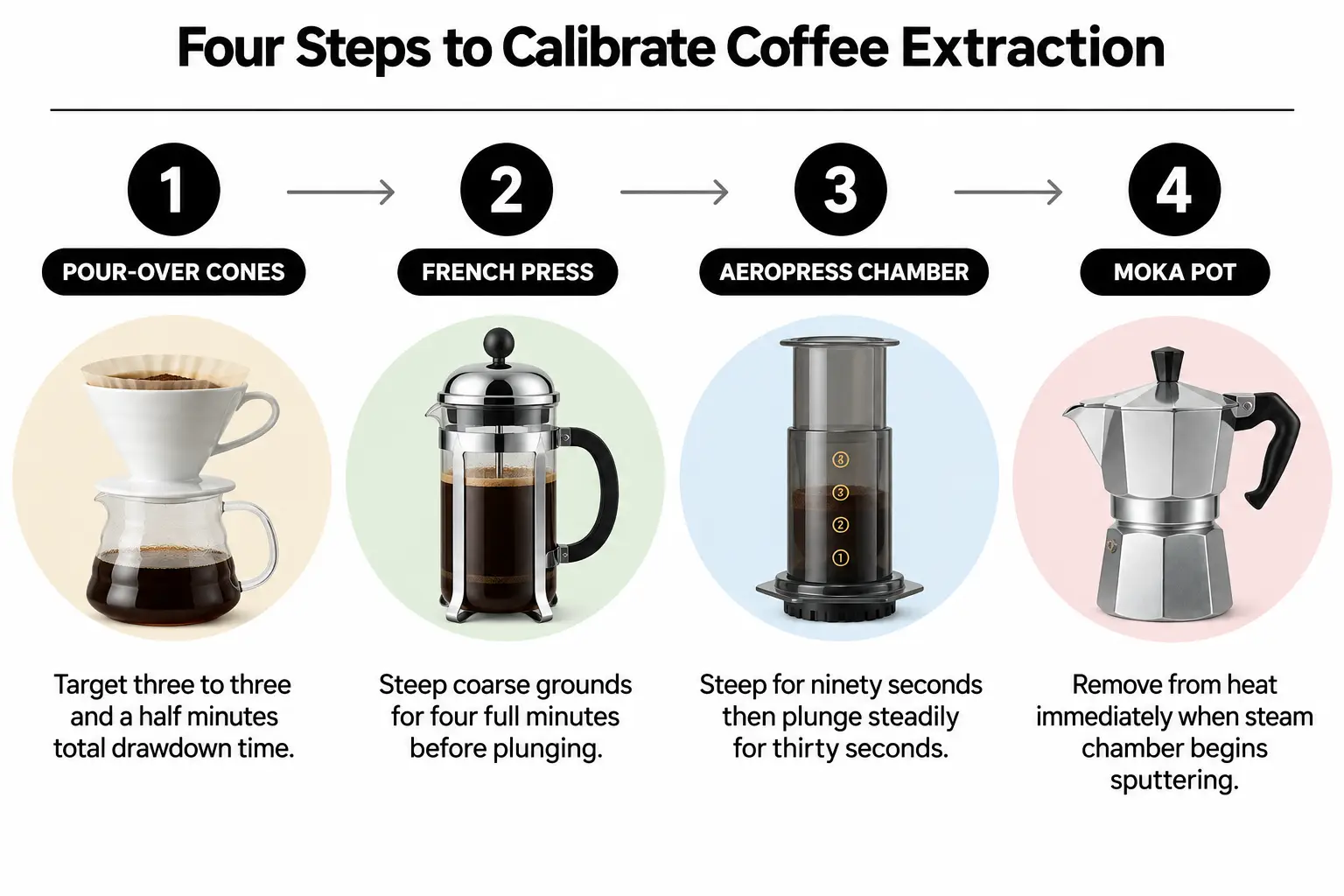
Use these timing targets for the equipment you have at home:
- Pour-over cones: Allow three to three and a half minutes for pouring and draining, using a medium-fine grind.
- French press carafes: Let coarse grounds steep for four full minutes, then gently lower the metal filter screen.
- AeroPress chambers: Steep a fine drip grind in hot water for ninety seconds, then press steadily for thirty seconds.
- Moka pots: Take the pot off the heat as soon as steam sputters. Keep the steam-driven extraction under sixty seconds.
Your choice of whole beans or ground coffee affects how fresh the grounds are when you brew. Grind your locally bought beans just before heating the water. That keeps gases from escaping too early and preserves the aromas, right there on your Staten Island kitchen counter.
How Do Immersion and Percolation Extraction Timers Differ?
Immersion means the grounds soak in water inside one vessel, as they do in a French press. Percolation means fresh water keeps flowing through a fixed bed of grounds. Those two ways of brewing draw flavor out of the bean at different rates.
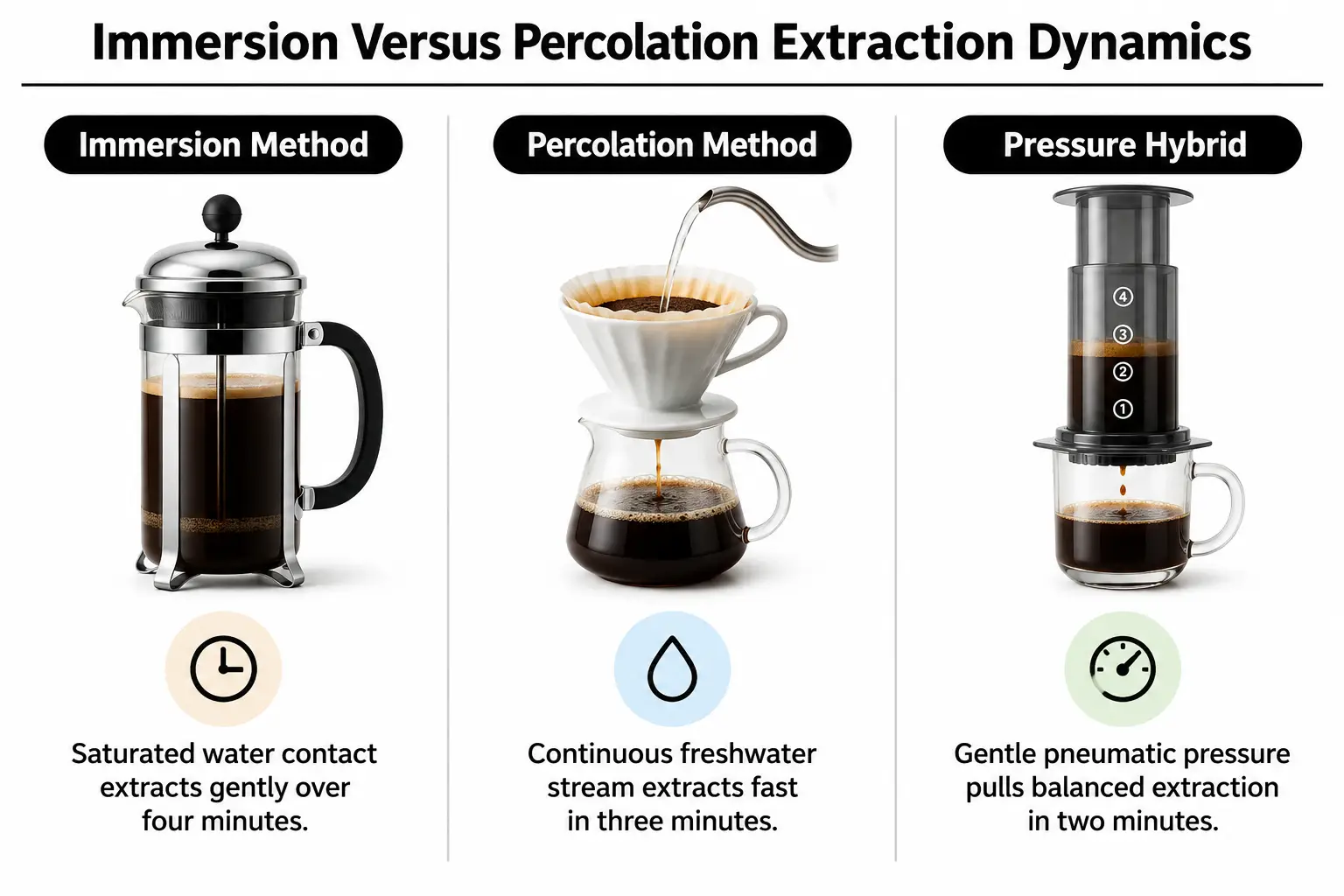
Percolation works faster because fresh water can keep dissolving more coffee throughout the brew. With immersion, extraction slows as the water fills with dissolved coffee compounds. Compare the timing and common problems for each method below:
| Brewing method | Target contact time | Best suited for | Main extraction risk |
|---|---|---|---|
| Immersion (French press) | 4:00 to 5:00 minutes | A full-bodied cup with some room for timing errors | Muddy silt from pressing too hard |
| Percolation (V60 / Kalita) | 2:45 to 3:30 minutes | Bright fruit notes and distinct flavors from the bean's origin | Water taking channels through the bed and leaving some grounds dry |
| Pressure hybrid (AeroPress) | 1:30 to 2:00 minutes | Quick camp mornings and concentrated coffee for travel | Pressing too hard and forcing fine silt past the paper seams |
Knowing these timing differences helps you choose coffee for backpacking or a day in Staten Island's parks. Set your timer for the brewer you're using. The same rule applies at a campsite and at your desk.
How Long Should Functional Mushroom Coffee Extract for Maximum Mental Clarity?
Give coffee with adaptogens, ingredients intended to help the body handle stress, three to four full minutes in hot water. Both the grounds and botanical extracts need that time to hydrate. This allows the 1,000 mg dose of Lion's Mane to release beta-glucans, its beneficial compounds, into the cup.
People choosing performance coffee blends often want help with afternoon crashes and mental fatigue. According to published research indexed by the National Institutes of Health, Lion's Mane supports thinking and focus. Properly timed mushroom coffee provides lasting alertness without the jitters associated with poorly extracted, high-acid generic dark roasts.
Rushing the brew leaves active ingredients behind in the used filter. Give it the extra minute so those ingredients reach your cup. That time provides steady energy for an outdoor outing or a long stretch of creative work at your desk here in Staten Island.
What Are the Most Common Contact Time Mistakes to Avoid?
Poor filter care can cause water-flow problems that a grind adjustment won't fix. Adding finer grounds when coffee runs through too quickly is the worst mistake here. It causes channeling, where water follows uneven paths through the grounds, rather than correcting the contact time.
Roaster's rule: Change your pour rate or grind setting one at a time, and keep the water between 195 and 205 degrees Fahrenheit.
An uneven bed of grounds causes trouble too. Water follows the easiest path through a tilted bed in a pour-over cone. Half the grounds get too little extraction while the rest get too much, leaving coffee that tastes sour and feels harshly dry in your mouth.
Learning how we trace our coffee beans from harvest to roasting helps explain why the bean's structure deserves care. That care matters with ethically produced organic mushroom coffee from local roasters. Gentle, even extraction respects the work that went into those beans before they reached your kitchen.
How Does Staten Island Tap Water Chemistry Shift Your Target Brew Time?
Staten Island tap water is relatively soft, usually measuring 30 to 50 parts per million of total dissolved solids. That measure describes how much dissolved material the water contains. Our soft city water draws out flavor a little more slowly than the mineral-rich hard water found elsewhere.
The NYC Department of Environmental Protection's drinking water data confirms this low mineral level. Calcium and magnesium help water draw compounds out of coffee. With less of those minerals available, allow an extra fifteen to twenty seconds of contact time to bring out the remaining sweet notes.
Try the adjustment at home: a pour-over that finishes in two minutes with filtered city water will almost certainly taste hollow. Pour more slowly to keep water in the grounds longer. For help matching your coffee-to-water ratio to local water, ask our team about your brewing method.
Straight Answers on Extraction and Performance Coffee
What is lions mane mushroom coffee?
It's quality ground or whole bean coffee mixed with a measured amount of Lion's Mane mushroom extract. You still get a rich coffee taste. The extract supplies beta-glucans, compounds that support working memory and reduce caffeine-related jitters.
Can I find affordable performance coffee without sacrificing sourcing quality?
Yes. Small-batch roasters can keep performance coffee affordable through subscriptions that cut out distributor markups. At Teddy Outdoors, we pair single-origin beans from Huila, Colombia, with pure Lion's Mane. That gives you carefully sourced coffee at a fair price per cup.
How do I know if my coffee is under-extracted or over-extracted?
Does under-brewed coffee upset sensitive stomachs?
Yes, a short brew concentrates the first organic acids without drawing out the later oils and sugars that help buffer digestion. Let the extraction finish so those compounds can balance the cup. The result is smoother coffee that's easier on your stomach, without unpleasant heartburn.
Dialing In Your Morning Cup with Teddy Outdoors
Enough contact time brings out the chocolatey balance in specialty beans. At Teddy Outdoors, we roast 100% Huila Colombia beans in small batches, adding 1,000 mg of Lion's Mane extract per serving. Our coffee gives you bold flavor without bitterness, plus steady mental energy for the Hylan Boulevard commute or the Greenbelt trails.
Browse our performance coffee subscription options if you want locally delivered whole beans from our online shop. We can also help you adjust your home brewing gear to get the extraction right. For help with your next brew, send us your brewing questions.
