


Hard Water Coffee Problems Faced by Staten Island Brewers

A harsh or unexpectedly bitter morning cup almost always points to excess mineral buildup inside your kettle or heating block.
Untreated tap water keeps specialty grounds from releasing their sweeter flavors. You get a dry, chalky aftertaste instead of the smooth performance coffee we make to support your daily focus.
We see this often across Staten Island, where changes in municipal water lines leave calcium and magnesium carbonate deposits inside small brewing valves.
Hard water dulls the fruit and chocolate notes in freshly roasted beans. It also leaves a crust on metal heating elements, lowering water temperature over time. Your equipment then extracts too little flavor from the grounds, giving you sourness up front and harsh bitterness at the finish.
To fix the brew, you need to know how local minerals affect your chosen grind and what to do about your water supply.
What's Inside This Guide
- Telltale Signs Hard Water Is Sabotaging Your Daily Extraction
- Deconstructing the Mineral Culprits Behind Off-Flavors and Machine Wear
- Practical Kitchen Steps to Balance Mineral Content and Descale Safely
- When Internal Boiler Scale Demands Dedicated Technician Service
- Routine Maintenance Schedule to Protect Equipment and Brew Quality
- Common Questions on Staten Island Water Chemistry and Brewing
- Reset Your Morning Routine with Freshly Roasted Performance Coffee
Telltale Signs Hard Water Is Sabotaging Your Daily Extraction
Mineral scale builds up inside brewing gear before you taste a problem in your favorite beans. A single weekend rarely makes much difference. After a month of daily brewing, though, ordinary tap water leaves clear signs in your equipment and in the cup.
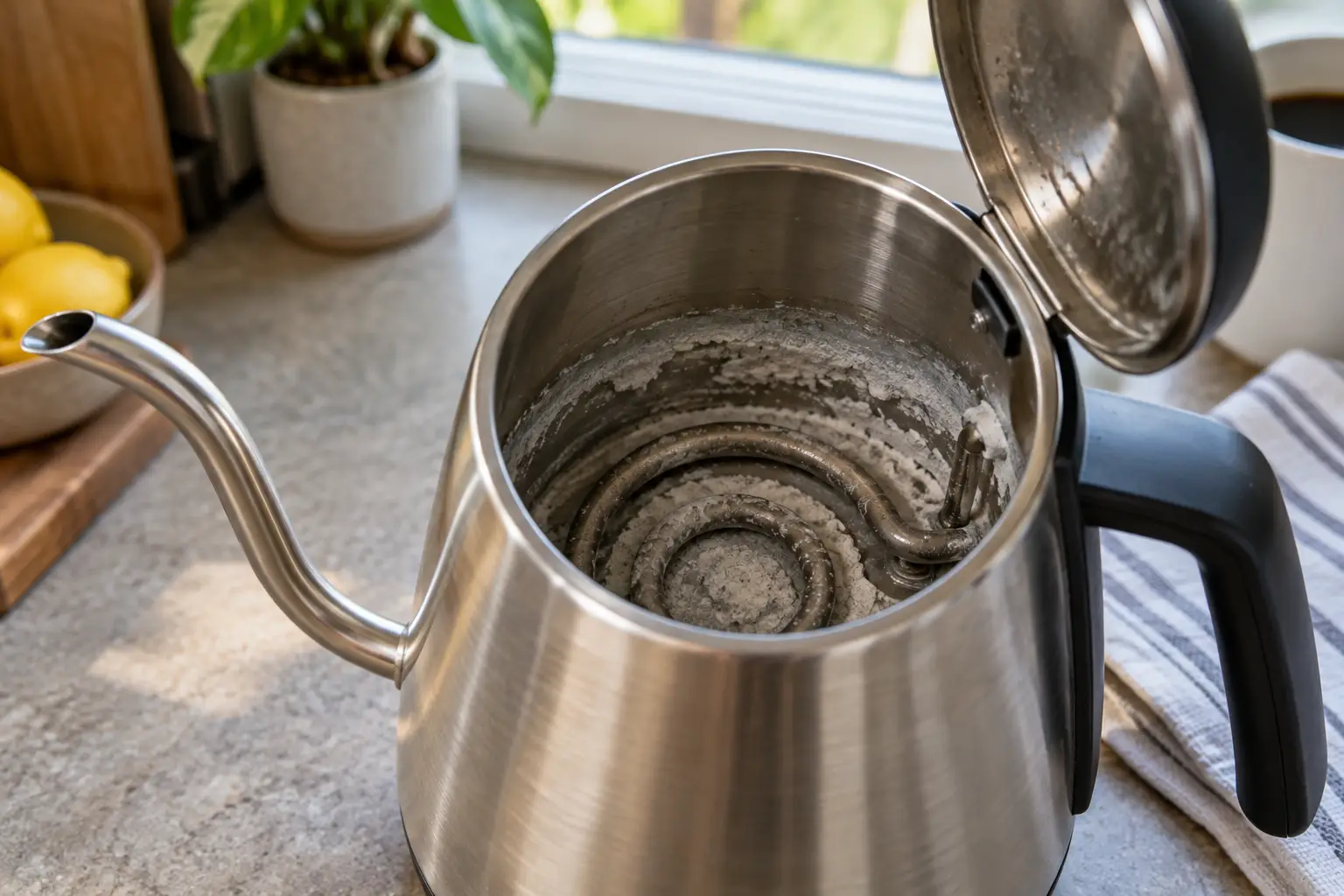
- Chalky film on brew surfaces: Cloudy white residue sticks to your glass carafe or the stainless steel walls of a gooseneck kettle.
- Muted aroma and heavy bitterness: Dry grounds still smell fragrant, but the brewed cup tastes muddy and drying, with none of that sweetness.
- Sluggish flow rates: Drip baskets take upwards of six minutes to drain. Espresso group heads, where water meets the grounds, sputter as internal screens clog.
- Loud boiler gurgling: Heating blocks make hissing or rattling sounds as trapped steam pushes through thick mineral crust on the heating coils.
Steam escaping around the portafilter gasket or a tripped over-temperature safety sensor means you should stop brewing immediately. These signs indicate that calcium deposits have completely blocked an internal pressure line. Under pressure, that blockage can rupture heating blocks or crack internal brass fittings.
Extraction insight: Water overloaded with dissolved carbonates works like a full sponge: it cannot absorb the subtle organic acids and fragrant oils that give specialty beans their character.
Deconstructing the Mineral Culprits Behind Off-Flavors and Machine Wear
Our borough's tap water travels through a large distribution network monitored by the city's drinking water department. At the upstate reservoir source, hardness is generally moderate. Aging cast iron and cement-lined mains add varying amounts of calcium, magnesium and bicarbonate ions, or dissolved mineral particles, before water reaches home taps.
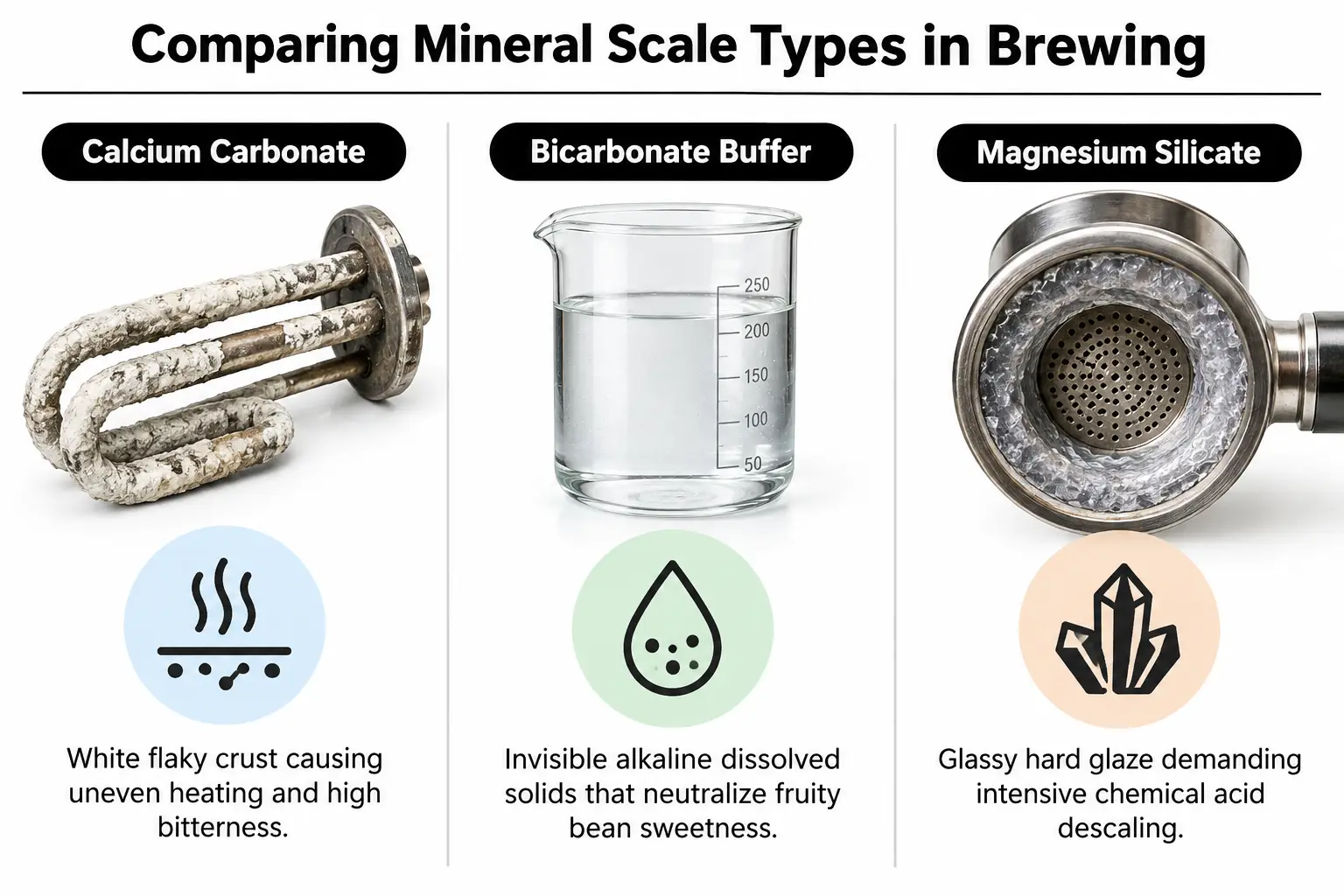
According to the federal guide to water hardness, even moderately hard water creates severe scale when heated repeatedly above 195 degrees Fahrenheit.
High bicarbonate levels neutralize the natural citric and malic acids in high-altitude Colombian beans, leaving a dull, strongly alkaline taste. Calcium also binds to fragrant compounds and draws out heavy, woody notes. Identifying the mineral problem helps you choose filter materials that address it, rather than buying a filter and hoping for the best.
| Mineral cause | How to identify it | Severity for equipment |
|---|---|---|
| Calcium carbonate limescale | Flaky white deposits in the kettle base and slow heating | High ($$) |
| Excess bicarbonate buffer | Flat, chalky coffee with no brightness or visible scale | Low ($) |
| Magnesium silicate crust | Stubborn, glassy coating that resists ordinary citric acid washes | Severe ($$$) |
| Iron and particle sludge | Reddish-brown stains on internal silicone tubing and pump valves | Moderate ($$) |
Readers of our guide to choosing single-origin coffee or blends know lighter roasts suffer most from mineral imbalance. Too many minerals flatten the range of flavors. The clear berry or citrus notes in a premium coffee become impossible to taste, even with good beans.
Practical Kitchen Steps to Balance Mineral Content and Descale Safely
Before spending money on parts or a new brewer, try addressing the mineral buildup at your sink. Most of these problems can be handled at home. Work through the steps in order to remove existing deposits and get the brewer working properly again:
Video: Comparing vinegar and coffee maker descalers from Keurig, Essential Values, Impresa and Urnex (Just A Dad Approved)
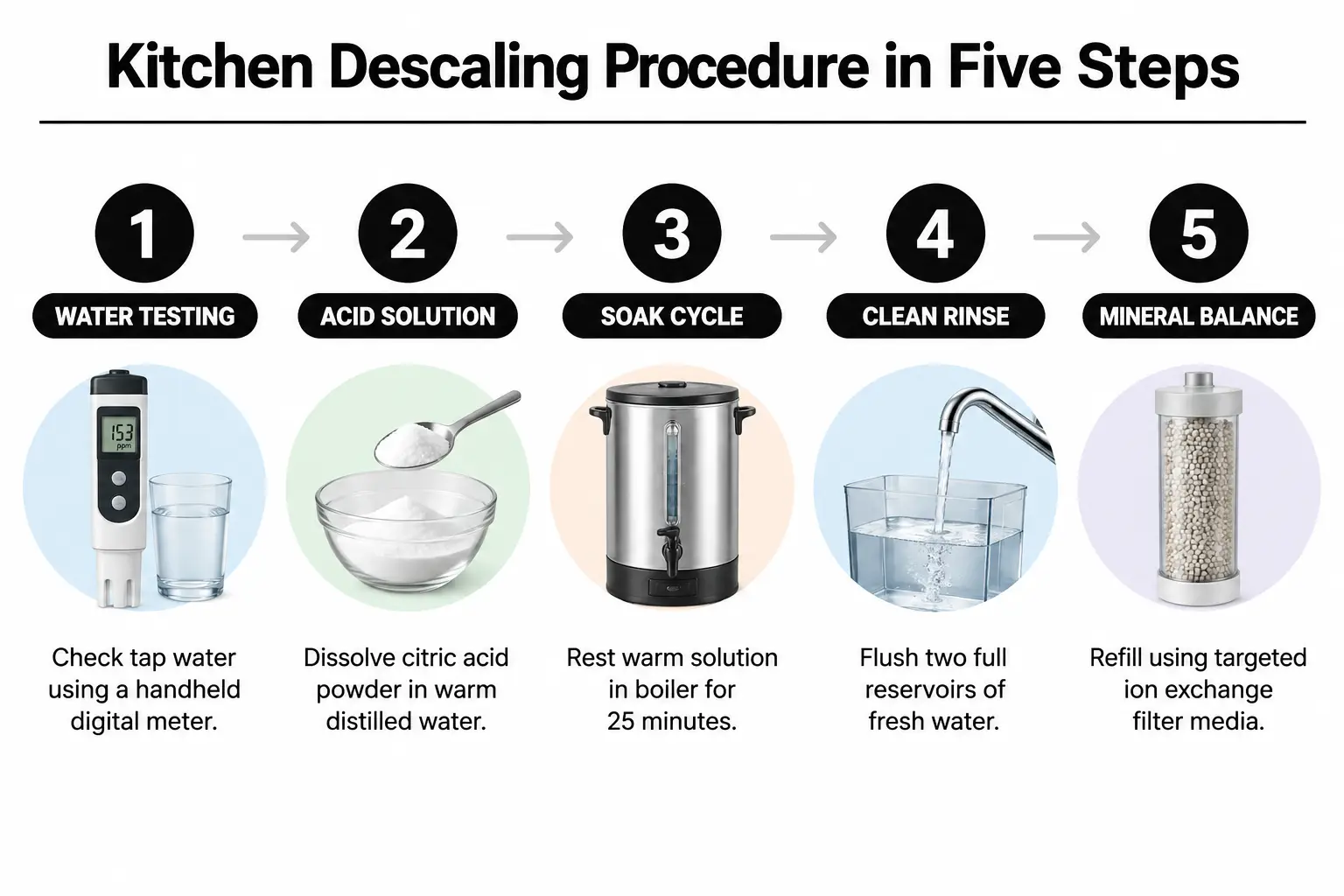
- Inspect and test your source water: Use a total dissolved solids (TDS) meter, which measures dissolved material, or an aquarium drop kit. Aim for 75 to 150 parts per million, based on guidelines from the Specialty Coffee Association.
- Mix an organic descaling solution: Dissolve two tablespoons of food-grade citric acid powder in one liter of warm distilled water. Skip raw household vinegar. Its acetic acid ruins silicone seals and leaves a taste that lingers.
- Run a controlled soak cycle: Pump half the mixture into the boiler, then turn the machine off. Leave it for 25 minutes so the acid can dissolve calcium bonds without scouring the metal walls.
- Flush with fresh water: Run two full reservoirs of clean, filtered water through the brew group and steam wand. Continue until the water comes out completely clear and tastes neutral.
- Switch to a dedicated filtration blend: Use an ion-exchange pitcher, which removes hardness minerals, or add mineral packets to distilled water. Keep water hardness steady between 50 and 80 parts per million.
Practical check: Never run pure distilled or reverse-osmosis water through a machine without adding minerals back. Pure water aggressively draws metals from brass boilers and lacks the magnesium needed to pull flavor from coffee grounds.
Clean brewing water helps you get the full value of a specialty coffee subscription. That matters for a kitchen brew before your commute as much as a cup made on an afternoon hike. Water quality determines how well the flavor comes out of the grounds.
When Internal Boiler Scale Demands Dedicated Technician Service
Home cleaning handles light surface deposits. Heavy scale inside a commercial dual-boiler machine or high-end espresso unit needs hands-on shop repair. Loose calcium chunks can travel from the boiler into three-way solenoid valves and needle flow restrictors, the small parts that control water flow. There, they can block it entirely.
Steady pump pressure on the gauge with only a trickle from the group head likely means scale has blocked an internal opening. A technician will disconnect power and open the outer case. Removing the heating elements lets them inspect the boiler from inside.
Repair work includes a targeted chemical bath and replacement of worn seals with food-safe silicone rings. The technician also tests the thermostat on the bench to check that it delivers the right temperature.
Forcing heavy scale through tiny valves with harsh acids at home often causes leaks around boiler gaskets. Once deposits physically block the machine, an experienced repair technician can save the boiler from permanent warping. That is the point to stop trying to flush the problem out yourself.
Routine Maintenance Schedule to Protect Equipment and Brew Quality
A regular cleaning schedule is much easier to manage than taking apart a scale-clogged appliance. These intervals help keep mineral crust from bonding to brass and copper parts:
- Every day: Empty leftover water from kettles and machine reservoirs. Water left overnight evaporates and leaves a higher concentration of minerals behind.
- Every two weeks: Backflush espresso group heads by running hot water backward through their cleaning cycle. Clean the shower screens to remove coffee oils that trap loose calcium particles.
- Every month: Replace your pitcher's carbon and resin cartridges so hardness minerals do not start passing through an exhausted filter.
- Every 90 days: Give drip brewers and pour-over kettles a preventive citric acid rinse. Check heating surfaces for pitting, the small holes that develop in metal.
Trail brewing gear needs the same care. As we discuss in our backpacking coffee guide, river water and changing campsite sources quickly leave minerals on portable equipment. Keep the kit clean so you do not bring stubborn scale home with it.
Common Questions on Staten Island Water Chemistry and Brewing
Is Staten Island tap water naturally considered hard or soft?
Staten Island tap water is generally moderately soft to slightly hard, at around 30 to 65 parts per million of calcium carbonate. Local water-main layouts affect that range. Warmer months or rerouted supplies can sharply raise mineral levels in some areas. Repeated heating in closed kettles quickly concentrates those minerals into stubborn scale.
Why does hard water make my coffee taste unpleasantly bitter?
Dissolved calcium and magnesium pull too much of the heavier, drying compounds from grounds while muting delicate acidity. Alkaline bicarbonates buffer the water, meaning they neutralize the bright organic acids that give high-altitude beans their sweetness and clarity. Instead of those flavors, you get a flat cup with a dry finish.
Can I brew quality coffee using straight bottled spring water?
Some spring waters work well, but many exceed 200 parts per million of minerals and quickly scale kettles. Check the label for total dissolved solids, aiming for 100 to 150 parts per million. Avoid high sodium or sulfate readings. Those can give hot-brewed coffee a salty or medicinal taste.
How do adaptogenic mushroom blends react to mineral-heavy water?
Lion's Mane extracts contain active compounds called beta-glucans that mix best in water with balanced mineral hardness. Too many carbonates can make these compounds settle out or taste overly earthy, rather than blending with the coffee's cocoa and nutty notes. Clean, soft-filtered water gives the brew a balanced flavor and silky texture.
Does a simple carbon pitcher filter eliminate water hardness?
Standard charcoal pitchers remove chlorine taste and heavy sediment, but dissolved calcium and magnesium pass through. Those minerals cause scale. Softening requires a cartridge with ion-exchange resin, a material that removes hardness minerals. Another option is a dedicated system that blends distilled water with added minerals to exact standards.
Reset Your Morning Routine with Freshly Roasted Performance Coffee
Once the water is right, the roast matters. At Teddy Outdoors, we roast 100% Huila Colombia beans in small batches across the USA. Our coffee pairs smooth specialty flavor with a functional 1,000 mg dose of Lion's Mane mushroom extract.
Each cup gives you rich flavor without bitterness, along with focused mental clarity for long days outdoors or at your desk.
For more on how we make our blends, read about our approach to coffee in Staten Island. Our guide to coffee for outdoor adventures explains more about what goes into the blend and why we make it this way.
Our single-origin roast avoids stomach acid discomfort and mid-morning crashes. Brew it before a morning climb, pack it for a remote campsite, or make a cup while working on a creative project at home.
Browse our coffee subscription or compare seven blends for trail athletes and outdoor adventurers. For help choosing a grind size or getting your brewing water right, ask our team before your next brew.
