


Light vs Medium Roast: Which Delivers More Usable Energy?

A balanced medium roast Colombian whole bean coffee gives you steady alertness without the stomach burn or heart flutter of underdeveloped roasts. For Staten Island desk work or weekend trail runs, caffeine content alone doesn't tell you how useful that energy will be. We want focus that lasts through demanding work, rather than a brief lift followed by a tiring drop.
Treating your morning cup as an emergency stimulant makes it harder to plan your intake. Light roasts carry slightly more caffeine by dry weight, but their chlorogenic acids can upset your stomach. That discomfort can throw off a morning well before lunch.
What's Inside This Guide
- Calculating Real Energy Beyond Pure Caffeine Milligrams
- A Step-by-Step Routine for Dialing In Daytime Alertness
- Roast Profiles Compared for Focus and Stomach Comfort
- Critical Extraction Variables That Dictate Mental Performance
- The Daily Preparation Timeline from Pantry to Productive Output
- Practical Inquiries on Roast Levels and Mental Endurance
- Dialing in Your Morning Fuel with Teddy Outdoors on Staten Island
Calculating Real Energy Beyond Pure Caffeine Milligrams
Planning your coffee intake means considering how your nervous system responds to the compounds in your cup. Light roast beans keep their dense cell structure and slightly higher levels of caffeine. Those differences don't always mean better focus at your desk or more stamina on the Staten Island Greenbelt trails.
The Chlorogenic Acid Trade-Off
According to Harvard's nutritional analysis of coffee, light roasts contain higher levels of chlorogenic acids. These compounds act as antioxidants, but they also speed up how quickly your stomach empties. Drinking a high-acid roast before breakfast leaves many people feeling unsettled rather than ready to concentrate.
A friend's light roast recommendation for hiking might taste good at home, yet its sharp acidity can cramp your pace halfway up the trail.
Sustained Cognitive Drive Over Spikes
Useful energy depends on how your body handles the brew. In a properly developed Colombian medium roast, the sugars have caramelized enough to soften the caffeine hit. People looking for a smoother cup of coffee usually want that balance. It prevents the quick rise and crash that can cut a focused work session short.
Roaster's rule: Light and medium roasts have nearly the same caffeine per brewed cup. The acids left in the beans, and how easily those beans dissolve during brewing, have a bigger effect on mental clarity.
A Step-by-Step Routine for Dialing In Daytime Alertness
Getting steady stamina and clear focus takes a little attention to your morning brew. We recommend following the same steps each day so you can see what works and what needs adjusting.
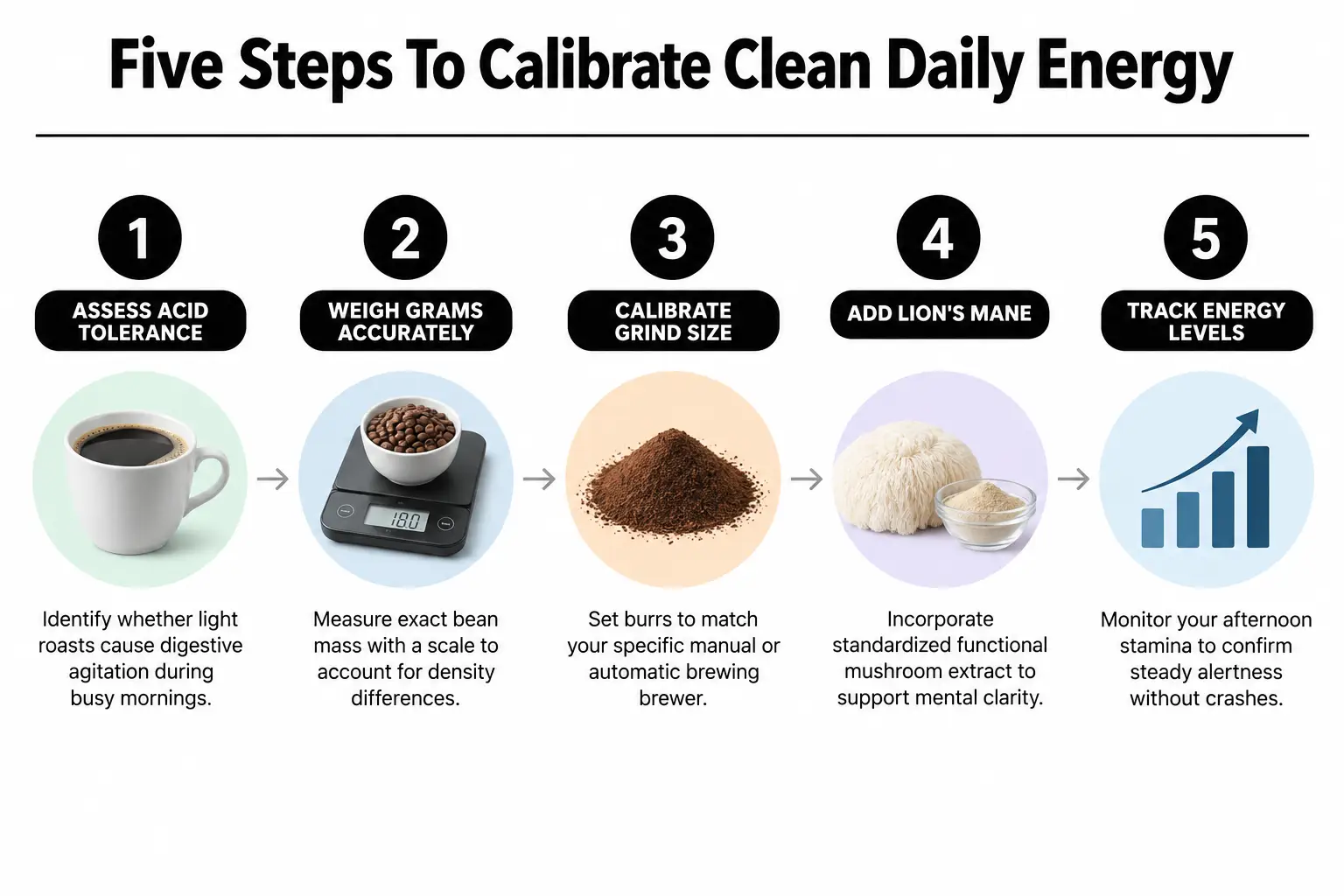
- Check your acid sensitivity: Notice whether light roasts give you a sour stomach, drawing physical energy toward digestion.
- Weigh each dose: Reach for a digital gram scale rather than a scoop, since bean density changes with the roast.
- Match the grind to your brewer: Adjust the gap between your grinder's burrs so water draws out soluble compounds evenly without pulling too many harsh tannins.
- Add functional adaptogens: Include a standardized 1,000 mg dose of Lion's Mane, a mushroom used to support mental clarity without synthetic stimulants.
- Track your midday energy: Write down whether you're still focused at 2:00 PM or struggling to work without another cup.
Whole Bean Grinding Versus Pre-Ground Convenience
Whole beans protect the delicate aromas that fade quickly after contact with air. With a good burr grinder at home on Staten Island, you can control how quickly water draws flavor from your coffee.
Before an early commute or outing, you may not want another task in the kitchen. Our guide to choosing whole beans or ground coffee helps you weigh freshness against the time you have to brew.
Fresh local batches of medium ground coffee are another option for mornings when convenience matters most.
Roast Profiles Compared for Focus and Stomach Comfort
Your choice of roast should fit the way you want to feel during the day. Each level changes the bean's chemistry, which in turn changes how your body responds to the cup.
Video: Eat-With-Ant explains light, medium, and dark roast coffee in under 90 seconds.
Light Roast Profiles
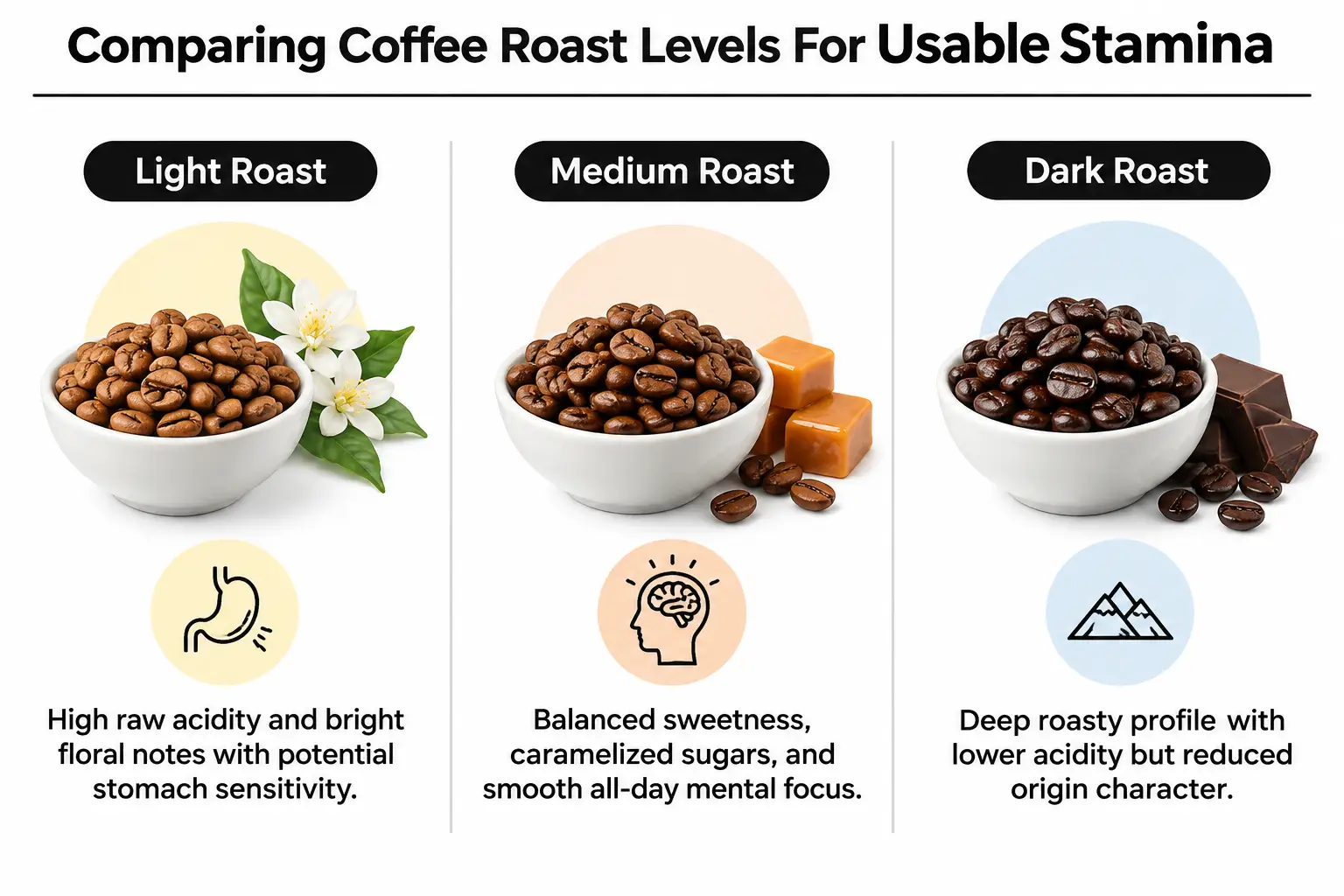
Much of a bean's original character stays intact in a light roast, including its floral notes and bright acidity. Fans often order light roast online for the complex fruit flavors. That acidity can still be hard on your stomach during stressful working hours or demanding endurance exercise.
Medium Roast Colombian Profiles
A specialty medium roast keeps some brightness alongside chocolate and caramel notes. Roasting through the first crack, when beans split open from heat, softens harsh acids into sweet compounds that dissolve easily. For an adaptogen coffee aimed at energy, pairing this roast with Lion's Mane extract gives sustained focus with no bitter edge.
Dark Roast Profiles
Longer roasting burns off most of the bean's natural acidity and brings out smoky flavors. Dark roasts are gentle on sensitive stomachs, but the extra heat breaks down many beneficial chlorogenic compounds. A heavy aftertaste can linger, leaving the cup feeling sluggish before an afternoon meeting.
| Roast option | Best for | Watch out for |
|---|---|---|
| Light roast | Slow sipping to enjoy delicate floral flavors and mild citrus notes | High acidity and possible digestive discomfort before eating |
| Colombian medium roast | Focus throughout the day or outdoor activity, with a balanced taste | Needs water between 195°F and 205°F to bring out its sweetness |
| Dark roast | Milk-heavy drinks and traditional French press brewing | Bitter, burnt notes can hide the flavors of the bean's origin |
Comparing a flavorful light roast with a Colombian medium roast starts with how well your stomach tolerates the bean's acidity. Taste matters, but so does feeling comfortable after you've finished the cup. For staying productive, medium roast consistently gives a steadier response.
Critical Extraction Variables That Dictate Mental Performance
Even good beans can taste sour or leave your mouth dry if the brewing is off. Extraction means drawing soluble compounds from the grounds with water. Done properly, it brings out pleasant oils while keeping out fine particles that can upset your stomach.
Key Variables to Control
- Water quality: Choose filtered tap water instead of hard mineral water to avoid a chalky taste.
- Brewing temperature: Keep the kettle between 195°F and 205°F, following these specialty coffee brewing standards.
- Pouring technique: Pour steadily in circles around the center so water reaches all the grounds at the same time.
- Clean equipment: Wash the brewer after every use to clear away stale coffee oils that add unwanted bitterness.
Uneven roasts from mass retailers can make consistent brewing difficult. Switching to a small-batch producer fixes the uneven extraction behind sudden caffeine crashes. A dependable Colombian medium roast gives you uniform bean density in every bag, so the same brewing method works from one cup to the next.
Practical check: An unpleasantly sour or salty cup means the grind is too coarse. A dry, sandpaper feeling on your tongue means it's too fine.
Knowing where your beans come from helps you check that consistent harvesting and processing keep unwanted flavors out of your cup. Our account of how we trace our coffee from bean to cup shows what that process looks like.
The Daily Preparation Timeline from Pantry to Productive Output
Keeping to a morning brewing routine saves time and helps you stay focused. From roasting to the first hours of work, this is the order we use for dependable results each day.
| Phase | What happens | Who handles it | Typical timing |
|---|---|---|---|
| 1. Sourcing | Single-origin beans from Huila, Colombia, roasted in small batches in the USA | Master roaster | Small batches each week |
| 2. Dosing & Grinding | Weigh 20 grams of whole beans, then grind just before brewing | You at home | 60 to 90 seconds |
| 3. Extraction | Saturate grounds at 200°F using a pour-over, drip machine, or French press | You at home | 3 to 4 minutes |
| 4. Focus Window | Steady absorption of caffeine and beta-glucans, active compounds in Lion's Mane | Your metabolism | 4 to 6 productive hours |
Following a routine curbs impulsive coffee drinking and keeps energy steady. Read why outdoor enthusiasts choose small roasters for a closer look at how careful small-batch roasting protects the beans. For questions about batch dates or which grind to choose, ask our team.
Practical Inquiries on Roast Levels and Mental Endurance
Does light roast coffee really have more caffeine than medium roast?
Measured by volume, light roast beans retain slightly more caffeine because they spend less time roasting. Medium roast beans expand during roasting, though, so weighing equal doses gives nearly identical caffeine amounts per cup. How comfortably you digest each roast makes the more meaningful difference.
Why does medium roast Colombian coffee provide smoother energy?
During medium roasting, caramelization breaks down raw organic acids while keeping natural antioxidants intact. That balance makes the Colombian coffee gentler to digest. The result is steady alertness without the restless pacing that highly acidic light roasts often cause.
How does Lion's Mane mushroom extract support cognitive work?
Lion's Mane contains beta-glucans, active compounds that support nerve growth factor and mental clarity. Adding a functional 1,000 mg dose to your morning coffee helps keep attention steady during long stretches of work. There's no need to raise your caffeine intake to get that support.
Can I brew medium roast coffee easily during outdoor recreation on Staten Island?
Yes, a portable French press, AeroPress, or standard drip basket will brew medium roast reliably. Because it dissolves readily, you can make a rich, low-acid cup at a Staten Island campsite without precise barista equipment. Our guide to coffee for backpacking explains how local roasts compare with major chains outdoors.
What should I do if I cannot find light roast coffee near me that tastes smooth?
Commercial light roasts are often underdeveloped, which leaves grassy flavors and a sour brew. Switching to a carefully roasted Colombian medium roast gives you pleasant aromas and a full body without bitterness.
Dialing in Your Morning Fuel with Teddy Outdoors on Staten Island
For demanding creative work or a trail run across Staten Island, we want coffee that provides useful energy. At Teddy Outdoors, we roast our signature RUFF RIDER ROAST in small batches here in the USA. Every batch uses 100% beans from Huila, Colombia.
Our 12 oz bags come as whole beans or medium ground coffee. Each serving includes a functional 1,000 mg dose of Lion's Mane to support clear thinking without synthetic stimulants. It's our alternative to sour brews and the afternoon crash.
To choose a bag for your daily routine or next outdoor trip, get in touch with Teddy Outdoors.
