


Boiling Water Ruining Your Roast? Dial in Brewing Temps

Let boiling water cool before pouring it over your coffee, aiming for 195°F to 205°F. Water straight from a whistling kettle can bury delicate notes under a harsh, dry taste. For our RUFF RIDER ROAST, that means losing the sweetness you bought Colombian coffee for in the first place.
We cover that problem in more detail in our post on getting a less bitter cup.
Keeping water within the recommended brewing range helps draw out sugars and aromatic oils without pushing the brew toward bitterness. Temperature is a small detail you can control before the first drop hits the grounds.
Finding good coffee can take some work, especially if you want both whole beans and ground options from several origins. After all that searching, the last thing you want is to spoil the flavor at your kitchen counter.
Here on Staten Island, coffee might come before the ferry at St. George or go into a thermos for the Greenbelt trails. Either way, letting the kettle cool a little gives the bean's own flavor a better chance to come through.
What's Inside This Guide
- The Thermal Physics Behind Bitter Extractions
- Dialing in Kettle Resting Times and Pour Stages
- Boiling Kettle Pours Compared to Controlled Thermal Methods
- Practical Gear Choices for Managing Heat at Home
- Matching Water Temperature to Coffee Elevation and Roast Level
- Ongoing Upkeep for Accurate Thermometers and Kettles
- Common Questions on Temperature Control and Extraction
- Taking Your Morning Brew Further on Staten Island
The Thermal Physics Behind Bitter Extractions
Extraction is simply water dissolving substances from ground coffee. Those include fruit acids and caramelized sugars, along with gases and material from plant fibers. At 212°F, that process moves quickly. The brew can take on too much of the bitter compounds called chlorogenic acid lactones and phenylindanes.
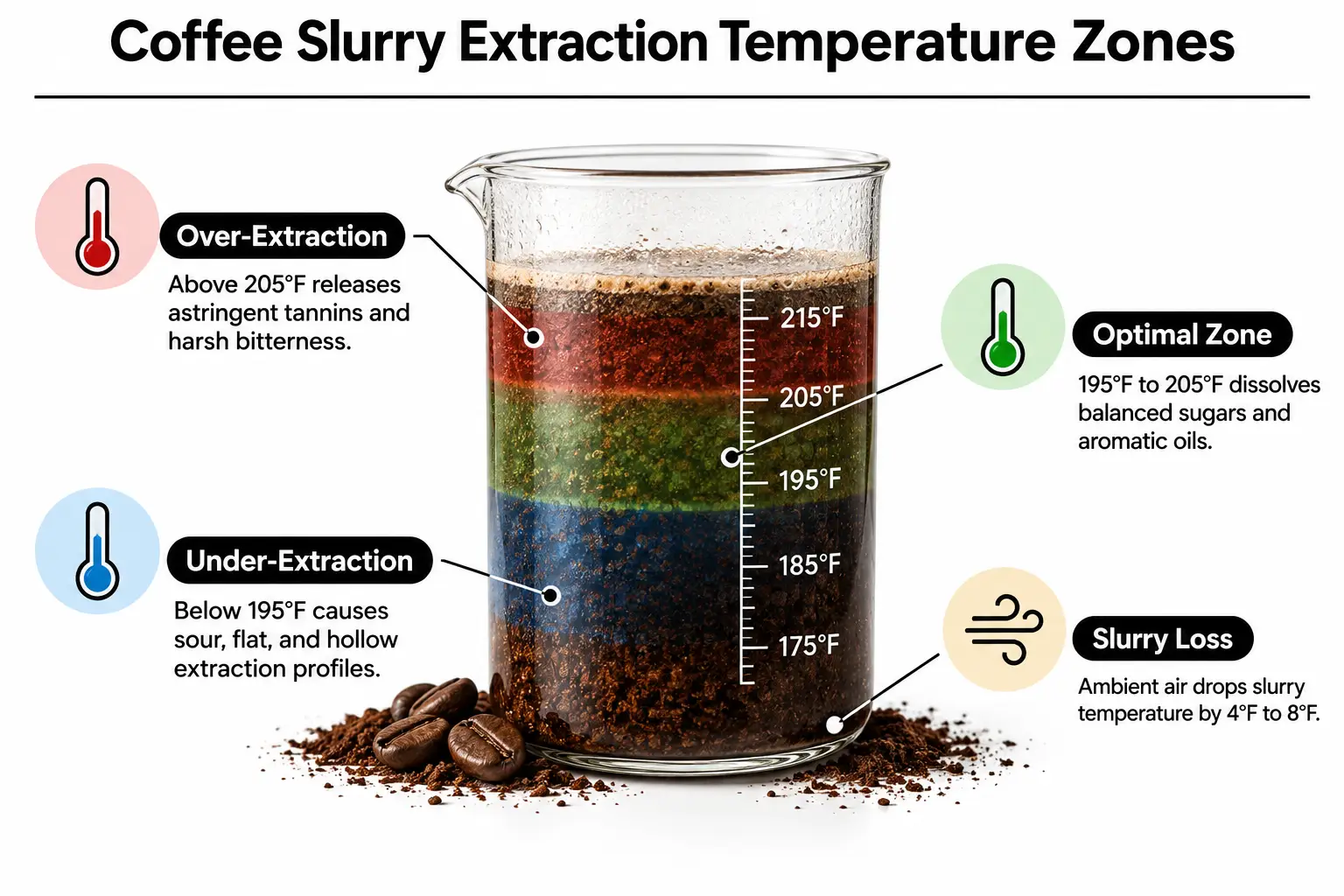
Research collected by the Specialty Coffee Association links water temperature to how fast coffee compounds dissolve. Controlling that heat helps keep the sweetness in our Colombian roast without the dry, puckering taste known as astringency. These are the main things to watch:
- Target extraction range: Aim for water between 195°F and 205°F as your starting point.
- Dissolution rate: Cooler water draws compounds out more slowly, while hotter water speeds up extraction.
- Slurry temperature: The mix of water and grounds is usually cooler than the kettle water because heat escapes into the surrounding air.
- Roast density: Dense beans grown at high elevations can handle slightly more heat than fragile dark roasts.
For anyone trying to fix bitter coffee, temperature is an easy part of the routine to overlook. Check it before assuming the bag itself is the problem.
Dialing in Kettle Resting Times and Pour Stages
A regular kitchen kettle is enough to start. Bring fresh tap or filtered water to a rolling boil, then take it off the heat. Open the lid for five seconds to release steam. Leave the kettle on a trivet for 45 to 60 seconds before you pour.
Video: Eli and Kate show how to adjust water temperature on a Barista Express espresso machine.
During that rest, the water cools from boiling toward the 200°F brewing zone. Keep your pour gentle and steady, with the spout close to the brewer. Pouring from high above exposes more water to air, so it loses heat before reaching the grounds. That can leave parts of the coffee bed extracting unevenly.
The Detail Most Brewers Miss: Kettle Pre-Warming
A cold glass dripper or ceramic carafe draws heat out of your brew as soon as water touches it. Rinse the paper filter with hot water before adding coffee. The rinse warms the cone and washes away paper dust, helping the brewing temperature stay steadier from the first pour to the last.
Unexpected sourness or bitterness can start with a cold brewer, even when the kettle temperature looks right. Our advice on getting more consistent coffee starts with making that equipment rinse part of the routine.
Boiling Kettle Pours Compared to Controlled Thermal Methods
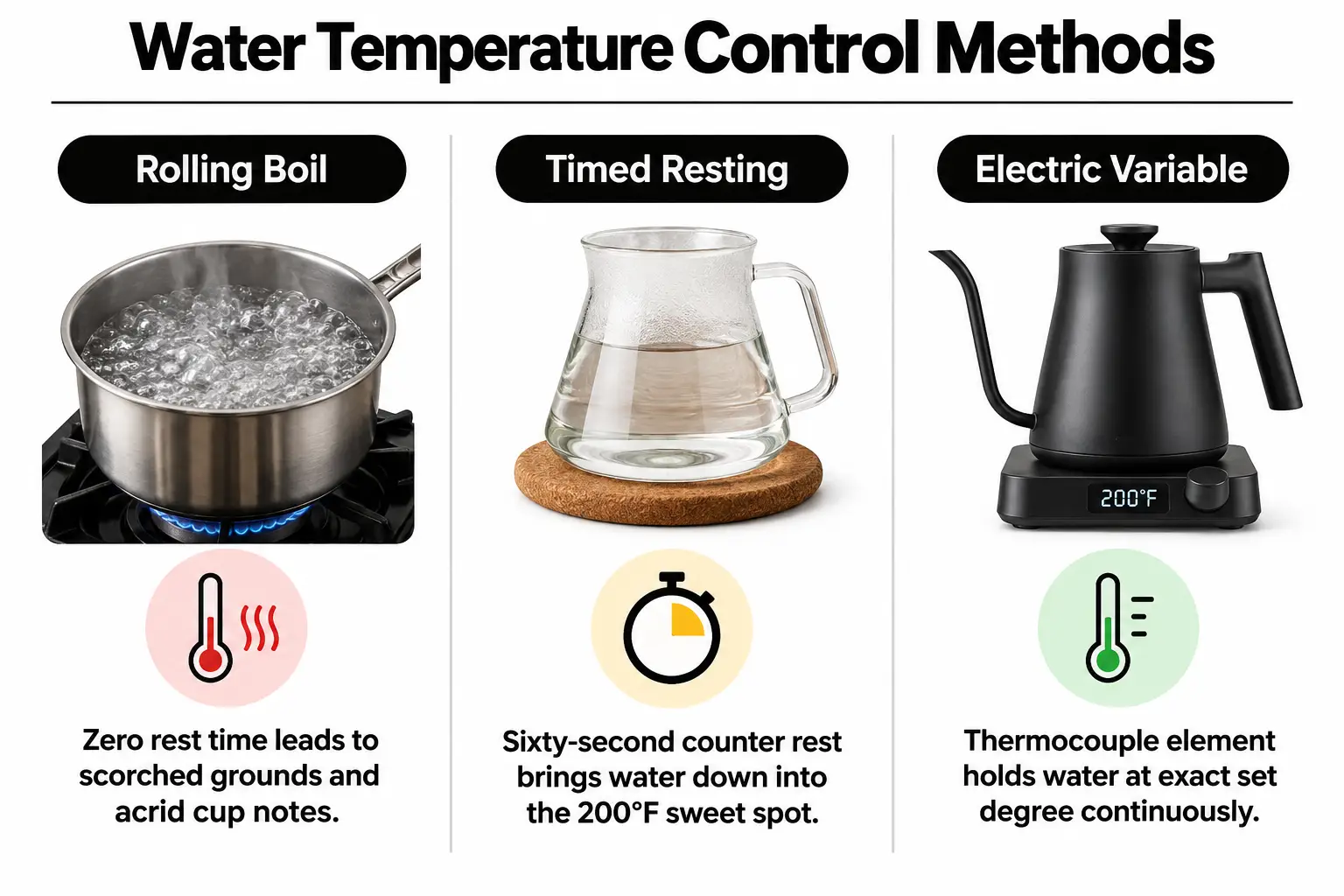
Pouring straight from the stove saves a little waiting, but it can cost you the balance in specialty beans. The comparison below shows what changes with each method, from a basic kettle rest to a digital temperature setting.
| Brewing method | Temperature control | Flavor balance | Effort required | Best setting |
|---|---|---|---|---|
| Straight from a rolling boil (212°F) | None | Harshness with burnt-sugar notes | Lowest | Cowboy coffee or emergency brewing at camp after dark |
| Timed kettle rest (60 seconds) | Moderate; varies with conditions | Balanced flavor with a sweet finish | Minimal | Everyday kitchen brewing |
| Digital variable-temperature gooseneck | Precise; depends on the kettle | Clear acidity without a scorched taste | Low to moderate | Manual pour-overs and delicate coffees |
A sixty-second kettle rest helps preserve subtle notes in medium-roast Colombian whole beans without adding gear to your counter. The same habit works outdoors: take the camp pot off the burner for a minute before brewing. Our guide to coffee for backpacking covers more ways to make a good cup on the trail.
Practical Gear Choices for Managing Heat at Home
Your choice of gear depends on how closely you want to watch the water and how much counter space you have. An expensive machine isn't required. Even a basic thermometer gives you more information than judging the kettle by its steam.
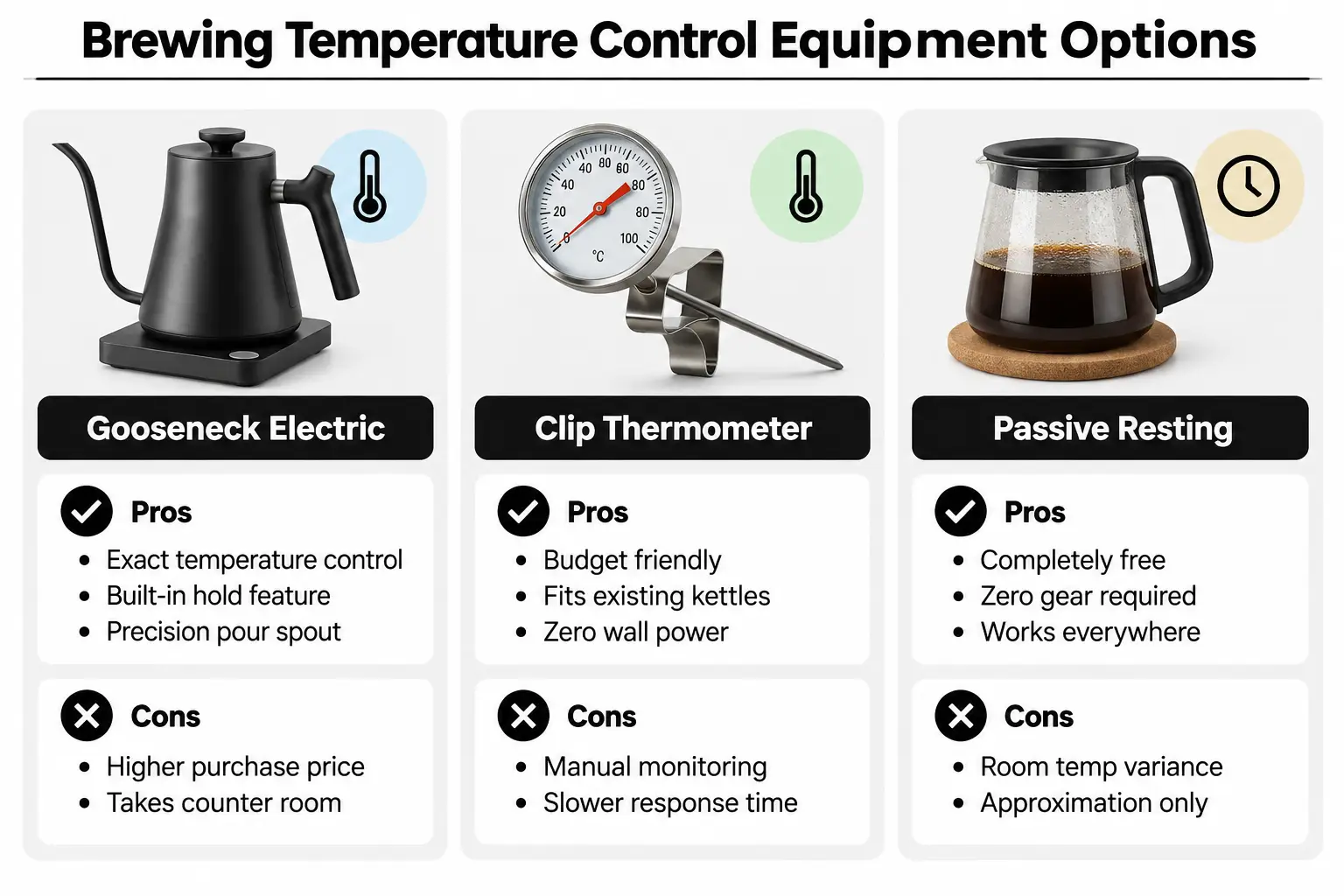
- Digital gooseneck kettles: Pro: Set the water to 200°F with a button and hold it there. Con: They cost more upfront and need their own counter space.
- Analog dial thermometers: Pro: A thermometer fits through your stovetop kettle's lid port so you can read the temperature. Con: You have to watch it as the water cools.
- The 60-second rest: Pro: Use the kettle you already own without spending anything. Con: Room temperature affects the result, especially in a drafty New York kitchen during winter.
A clip-on dial thermometer keeps things simple when you shop for coffee and want better control over each bag. There's no new machine to learn. For help choosing equipment or adjusting your brew, ask our crew at Teddy Outdoors for a practical recommendation.
Matching Water Temperature to Coffee Elevation and Roast Level
Where beans grow and how deeply they're roasted affect how readily they release flavor. Dense beans from high elevations need more heat to bring out sweetness. Darker roasts call for cooler water, which helps keep the cup from tasting ashy.
| Roast & bean origin | Recommended water temperature | Main risk | Brewing adjustment |
|---|---|---|---|
| Huila Colombian medium roast | 198°F – 202°F | Losing bright fruit and nut notes to a scorched taste | Pour slowly in circles, working in stages |
| High-altitude light roast | 203°F – 205°F | Sourness from extracting too little flavor | Grind finer and use hotter water |
| Traditional dark French roast | 185°F – 192°F | A bitter, smoky taste that dries the mouth | Use cooler water and a shorter brew time |
| Decaf or low-density beans | 195°F – 198°F | Drawing too much from the porous bean structure | Grind coarser and pour more gently |
Roaster's rule: Use cooler water for darker roasts to keep their caramel sweetness from giving way to a bitter, burnt taste.
That balance helps explain why smooth roasts have caught on at breakfast tables across Staten Island. A moderate roast paired with controlled water heat brings out chocolate notes without a harsh finish. The roast and your brewing temperature need to work together.
Ongoing Upkeep for Accurate Thermometers and Kettles
Mineral scale can build up quickly inside a kettle, especially with repeated use of municipal tap water. That coating traps heat and can interfere with the sensors. It also makes the kettle take longer to boil.
Monthly Equipment Calibration Checklist
Once a month, check the equipment you rely on for temperature readings and a steady pour:
- Descale the kettle: Soak the inside with equal parts white vinegar and water for thirty minutes. Boil once, then rinse thoroughly.
- Check dial thermometers: Place the stem in boiling water at sea level. Adjust the nut on the back until the dial reads 212°F.
- Inspect gooseneck spouts: Remove trapped mineral flakes so the water flows in a smooth, steady stream.
Keeping those parts clean makes it easier to get the same flavor from your coffee each morning.
Dialing in Water Temperature: Common Questions Answered
Why does boiling water make coffee taste bitter?
Boiling water draws bitter compounds, including phenylindanes, out of the grounds quickly. Those flavors can overwhelm the sweetness. Bringing the water down to 195°F to 205°F helps keep the cup balanced and protects the more delicate flavors.
Does Staten Island tap water impact brewing temperature?
Minerals in tap water affect the taste of the brew, but water still boils around 212°F at sea level in Richmond County. A 60-second kettle rest lets it cool toward the 200°F brewing zone. The rest gives you a simple starting point for your morning routine.
Can water ever be too cool for brewing coffee?
Yes. Below 190°F, water can leave too many sugars and aroma compounds in the grounds, making hot coffee taste weak or sour. Cold brew uses a different approach: twelve to twenty-four hours of steeping gives the water time to work without heat.
Should I use the same brewing temperature for light and medium roasts?
Light-roast whole beans benefit from water around 204°F, which helps draw sweetness from their dense structure. For a medium roast such as ours, aim for 198°F to 202°F. That range gives the cocoa and honey notes room to come through.
What is the easiest way to cool boiling water without extra gear?
Take the kettle completely off the burner and open the lid for five seconds to release steam. Then let it sit for one minute on a trivet at room temperature. This brings the water down toward the 200°F range without buying another piece of equipment.
Taking Your Morning Brew Further on Staten Island
Good coffee at home doesn't require a lesson in chemistry. Start with well-sourced beans and pay attention to the water before you pour. For a Staten Island morning, that's a manageable change, even if you're getting a thermos ready on your way out the door.
At Teddy Outdoors, we roast 100% Huila Colombian beans in small batches in the USA. Each bag contains 1,000 mg of organic Lion's Mane mushroom, added with mental sharpness in mind. It's coffee for a morning at your Todt Hill desk or a day pack headed to High Rock Park.
Before choosing your next bag, check a few details that affect how it will brew:
- Verify origin altitude: High-grown Huila beans have a dense structure that responds well to carefully controlled pour temperatures.
- Check roast dates: Fresh, small-batch coffee keeps delicate aromas that overly hot brewing water can bury.
- Match your grind: Buy whole beans to grind at home, or choose medium-ground coffee for drip machines and pour-overs.
- Avoid overly dark roasts: A balanced medium roast gives you a full body without the natural bitterness of a harsh roast.
- Talk to local roasters: Ask directly when you need help choosing a grind setting or adjusting your water temperature.
Contact our crew with your brewing method, and ask which grind and water temperature to use for your next bag.
