


Beginner Guide to Nootropic Brews for Staten Island Walkers

For an early Greenbelt loop, start with a balanced roast like UP & AT'EM to avoid stomach burn and sudden heart flutter. Your pace and distance matter, too. Flat gravel paths call for steady hydration, while cold uphill walks call for functional botanicals to help with mental fatigue as your legs tire.
Most local walkers reach for the dark roast in the kitchen, drink two mugs, and head out already dehydrated. Within forty-five minutes, the acid starts to bite and the caffeine lift fades. That afternoon fog can arrive before the halfway marker.
What's Inside This Guide
- Why Morning Fuel Shapes Your Trail Experience
- Whole Bean Versus Ground: Nailing Your Pack Weight
- Matching Roast Profiles to Staten Island Trails
- How Functional Roasts Fit Your Field Kit
- Five Steps to Brewing Before You Step Out
- Balancing Bean Quality Against Hiking Gear Costs
- Questions Staten Island Walkers Ask About Functional Coffee
- Your Next Steps on the Greenbelt Trails
Why Morning Fuel Shapes Your Trail Experience
Six miles through maritime forest and damp creek beds takes steady energy. Commercial roasts often use scorched beans that give you a quick rush, then a sharp drop. Losing focus becomes a real problem three miles into High Rock Park, where exposed roots need your attention.
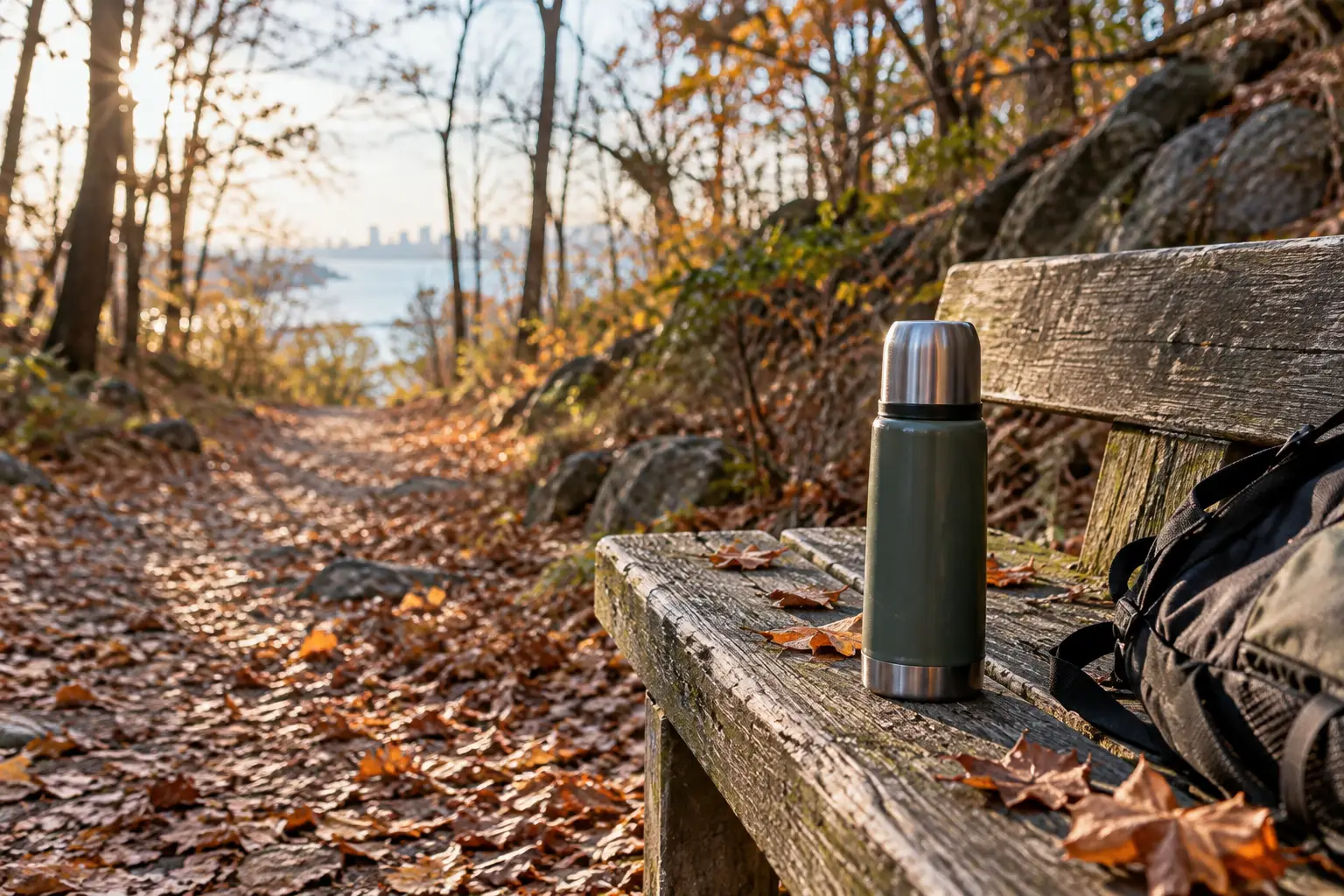
Good beans paired with adaptogens, natural ingredients used to support stress response, deliver caffeine alongside antioxidants. Research in this National Institutes of Health archive indicates that mushroom compounds called beta-glucans support mental stamina during sustained effort. That pairing avoids the twitchy feeling and hollow stomach ache of a typical convenience-store cup.
Trail walker's rule: Try a new brew and your coffee-to-water ratio on a neighborhood loop, never for the first time on an eight-mile trail day.
The wrong roast can leave you dealing with an upset stomach in the woods. Our guide to how walking outdoors starts at your feet covers one part of getting ready. What you drink before lacing your boots deserves the same attention.
Whole Bean Versus Ground: Nailing Your Pack Weight
Choose between less prep and keeping more flavor in the beans. Ground coffee saves time before sunrise over the Arthur Kill. Whole beans protect delicate floral notes from exposure to air, but you'll need to grind them before brewing.
Finding Your Grind Profile
At Teddy Outdoors, we blend beans from Guatemala, Ethiopia, Brazil, and Sumatra for UP & AT'EM. Use a medium-coarse grind if you're taking ground coffee out to brew in a travel mug. Fine grounds release too much flavor and turn bitter when left in an insulated flask for more than thirty minutes.
| Grind Option | Recommended Starting Point | What to Watch |
|---|---|---|
| Pre-ground medium | Best for brewing at home and filling a travel mug | Loses its most delicate aromas within 14 days of opening |
| Whole bean (ground at home) | Grind coarse just before the kettle boils | Needs an even grind from a burr grinder for a clean cup |
| Hand-ground on the trail | Best for brewing during a park-bench break | Adds weight and takes up space on faster walks |
Keep things simple by brewing before you leave the driveway. A well-brewed light roast holds its dried berry and bright citrus flavors as it cools to drinking temperature on the trail.
Matching Roast Profiles to Staten Island Trails
Staten Island trails ask different things of your legs and your attention. A paved shoreline stroll takes a different kind of focus from a climb up the damp gravel switchbacks of Moses' Mountain.
Dark, oily roasts tend to sit heavily in your stomach on sudden climbs. Light roasts with Ethiopian and Guatemalan beans have a brighter acidity that feels lighter while you walk. Read our comparison of craft roasters and dark commercial beans for more on how processing at origin affects your body during exercise.
| Walking Route or Terrain | Recommended Choice | Avoid |
|---|---|---|
| Greenbelt Yellow Trail (rock and root climbs) | UP & AT'EM light roast with a honey finish | Oily dark French roasts with heavy dairy |
| Franklin D. Roosevelt Boardwalk (flat paved walking) | A functional light blend brewed cold | Sugary syrups that bring an energy crash mid-walk |
| Wolfe's Pond Park trails (mixed dirt and sand) | Medium-ground pour-over in a double-wall thermos | Single-origin robusta blends high in chlorogenic acid, a natural coffee compound |
Pacing rule: Drink eight ounces of plain spring water with your coffee before heading out to prevent muscle tightness on cold mornings.
Need details about bean origins or storage? Contact our roasting team directly. We test our batches with active mornings in mind.
How Functional Roasts Fit Your Field Kit
A hot drink in the woods doesn't require a twenty-pound rucksack full of titanium gear. Your bottle does deserve some thought, though. Glass presses break easily, and unlined steel flasks can change delicate floral aromas.
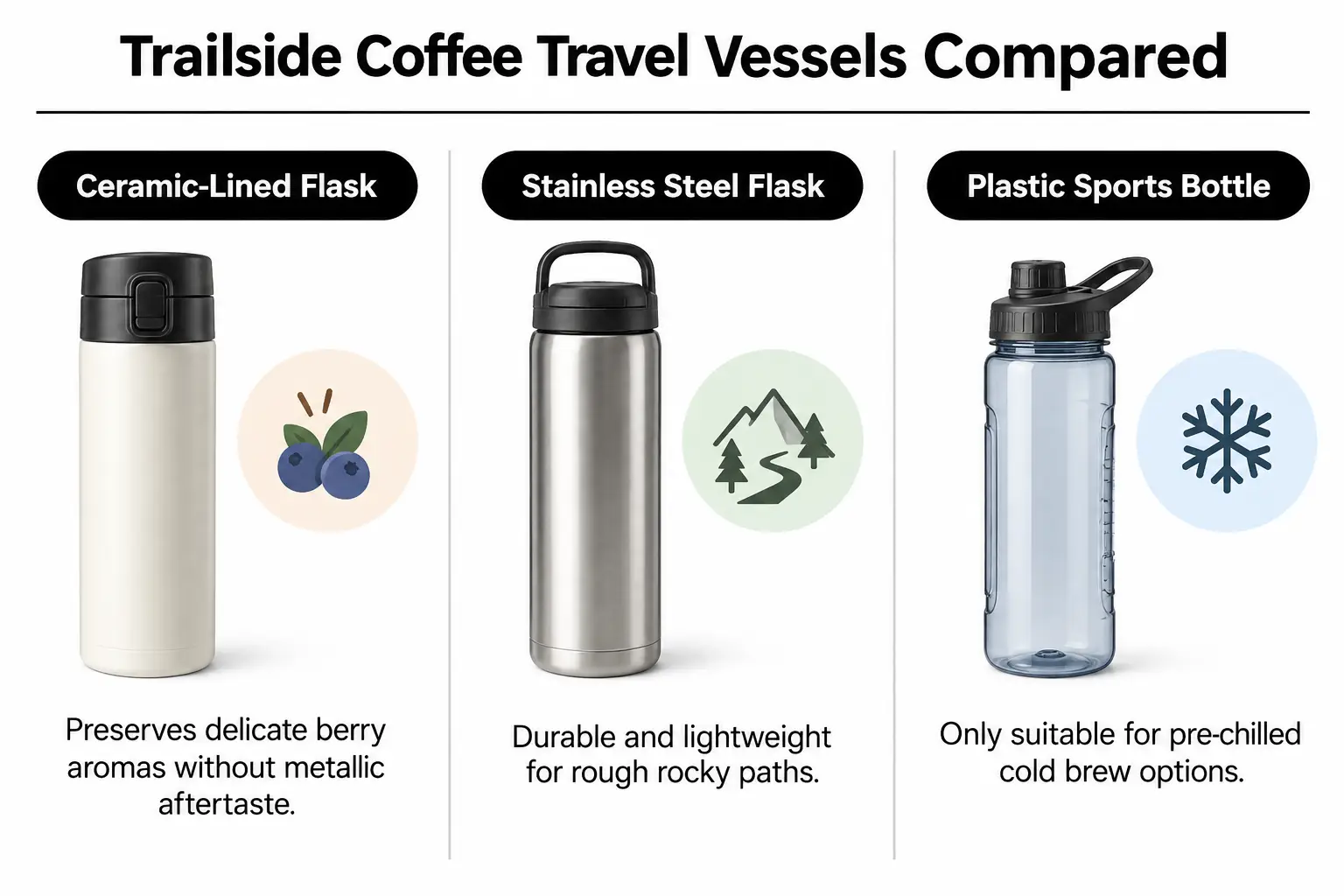
Lightweight gear that doesn't leak lets you watch wildlife instead of checking your bag. Use our minimalist day hike packing checklist to put together a practical kit without loading extra weight onto your hips.
| Starting Point | Pairing Direction | What to Sample or Test | Intended Effect |
|---|---|---|---|
| Insulated stainless flask | Choose a ceramic-lined interior | Taste after 2 hours to check for a metal tang | Keeps the citrus aroma and bright finish |
| Hand-drip paper filter | Use unbleached natural-fiber cones | Rinse the paper before adding coffee | Removes woody, cardboard-like flavors |
| Hydration waist pack | Add a 12 oz insulated side-holster sleeve | Walk 1 mile to check for bouncing and leaks | Keeps your hot drink within reach while walking |
The right flask and a bright blend give you a good reason to pause and recharge at a rest stop. Our guide to coffee gear bundles for hikers covers all-in-one setups that pack down flat.
Five Steps to Brewing Before You Step Out
No laboratory tools are needed for a balanced cup. A consistent routine brings out the best flavors in Guatemalan and Sumatran beans without drawing out the bitter compounds. Start with the same method each morning so you can tell what needs adjusting.
- Measure your water-to-coffee ratio: Aim for about 15 grams of water per gram of coffee. That's roughly two rounded tablespoons for a six-ounce mug.
- Check your water temperature: Bring fresh water to a rolling boil. Take it off the heat for thirty seconds to let it settle near 200 degrees Fahrenheit.
- Saturate the grounds slowly: Add enough water to wet the medium grounds evenly. Pause for thirty seconds for the bloom, when trapped gases escape from the coffee.
- Complete the pour in circular motions: Add the rest of the water slowly in gentle circles. Keep the level steady instead of flooding the brew basket.
- Preheat your travel container: Swirl a little hot water inside the flask before filling it. This keeps the stainless steel from taking heat from your coffee straight away.
Extraction rule: Grind finer if your brew tastes sour or sharp. Go coarser if it leaves a chalky dryness at the back of your tongue.
These steps bring out the honey finish and berry notes without making brewing a chore. For more ways to make time outside part of your morning, read our ideas for connecting with nature.
Balancing Bean Quality Against Hiking Gear Costs
It's easy to spend heavily on titanium trail pots, then buy cheap beans that spoil your morning coffee. Put your budget toward the things that affect your body and stamina first. Fancy cooking gear can wait.
| Budget Level | What to Prioritise | What to Question |
|---|---|---|
| Starter walker ($) | Fresh multi-origin light roast and a sturdy reusable mug | Costly backcountry mini-stoves and titanium cutlery |
| Regular day hiker ($$) | A ceramic-burr hand grinder and airtight bean storage | Single-use filter pods that add plastic waste |
| Weekend explorer ($$$) | A whole-bean subscription and insulated field flasks | Battery-heated travel tumblers that fail in cold weather |
Responsibly sourced beans are worth the spend for your trail coffee. Our comparison of sustainable outdoor gear and craft coffee explains why knowing what's in your cup matters as much as having durable fabric in your pack.
Questions Staten Island Walkers Ask About Functional Coffee
Will nootropic coffee make me feel hyperactive or jittery on the trail?
No, quality functional blends are made for steady alertness without sharp adrenaline spikes. Pairing light roasts with natural adaptogens keeps caffeine release even over several hours. That avoids the sudden shakes often associated with commercial energy drinks or dark coffee brewed long enough to pull out too much bitterness.
Where to buy nootropic coffee that suits outdoor day trips?
Order online directly from Teddy Outdoors for roasts we prepare for mornings outside. Buying from us guarantees fresh whole beans or medium-ground coffee, rather than bags left on a warehouse shelf for months. Each 12-ounce bag ships to your door on Staten Island.
How does light roast acidity affect digestion during vigorous walking?
Fruit acidity in high-elevation beans differs from the stomach burn caused by scorched, stale oils. Gently roasted, high-grade beans make a clean cup that digests easily without inflaming the stomach lining. Plain water alongside your coffee also helps keep digestion comfortable while you hike.
Can I prepare my trail coffee as a cold brew the night before?
Yes, steep medium-ground UP & AT'EM in cool water for twelve hours for a smooth brew with less acidity and stronger dried berry notes. Strain it into an insulated flask and refrigerate overnight. Come morning, your cold coffee is ready to take on a sunny trail loop.
Do I need specialized brewing equipment to enjoy functional blends?
Your usual home drip maker or French press works well with our medium-ground coffee, as does a simple pour-over cone. The functional botanicals stay evenly mixed throughout the roast. There's no need for special brewing gear or pressurized filters to get the full benefits.
Your Next Steps on the Greenbelt Trails
Staten Island's protected parklands offer room to clear your head, and thoughtful ingredients help fuel the walk. Before leaving for the trailhead this weekend, check your water and coffee setup along with the rest of your daypack:
- Fill your main bottle with fresh spring water before pouring your coffee.
- Brew UP & AT'EM with clean, filtered hot water.
- Transfer your coffee to a ceramic-lined or double-walled travel flask.
- Pack a light windbreaker and a local trail map in your daypack.
- Leave early for quiet trails and morning birdsong.
Our roasts at Teddy Outdoors are made to help people get back to fresh air and quiet paths. Steady energy matters on the paved paths at Conference House Park as much as it does over miles of woodland dirt.
For details about our roasting schedule or help choosing your next bag, ask our crew before your next local walk.
