


How to Make Citrus-Forward Cold Brew Using Light Roast Beans

For bright citrus cold brew, use a coarse grind and a short hot bloom, then steep your light roast in the fridge. Our light roast brings green apple and sweet tangerine notes to a clear, tea-like cup. Watch out for steeping too long, which draws out woody flavors and dulls the fruit.
Finding fresh whole beans and ground coffee from several origins in one place can be difficult. Once you have beans you like, cold immersion gives you a way to brew them at home. Keep the concentrate chilled until you're ready to pour a glass or pack it for an outing.
What's Inside This Guide
- Why Cold Steeping Light Roasts Requires Precision
- The Step-by-Step Immersion Blueprint
- Grind Profiles and Filtration Gear Choices
- Water Chemistry and Temperature Thresholds
- Cold Brew Timeline and Extraction Stages
- Citrus Cold Brew Common Questions
- Fresh Whole Beans for Staten Island Brewers
Why Cold Steeping Light Roasts Requires Precision
Light roasts stay dense because they spend less time in the roaster. Their tight bean structure holds onto the natural acids that give coffee its fruit notes. Standard cold brew methods tend to suit oily, dark roasts, which release roasted sugars and bitter flavors more readily.
Preserving Delicate Organic Acids
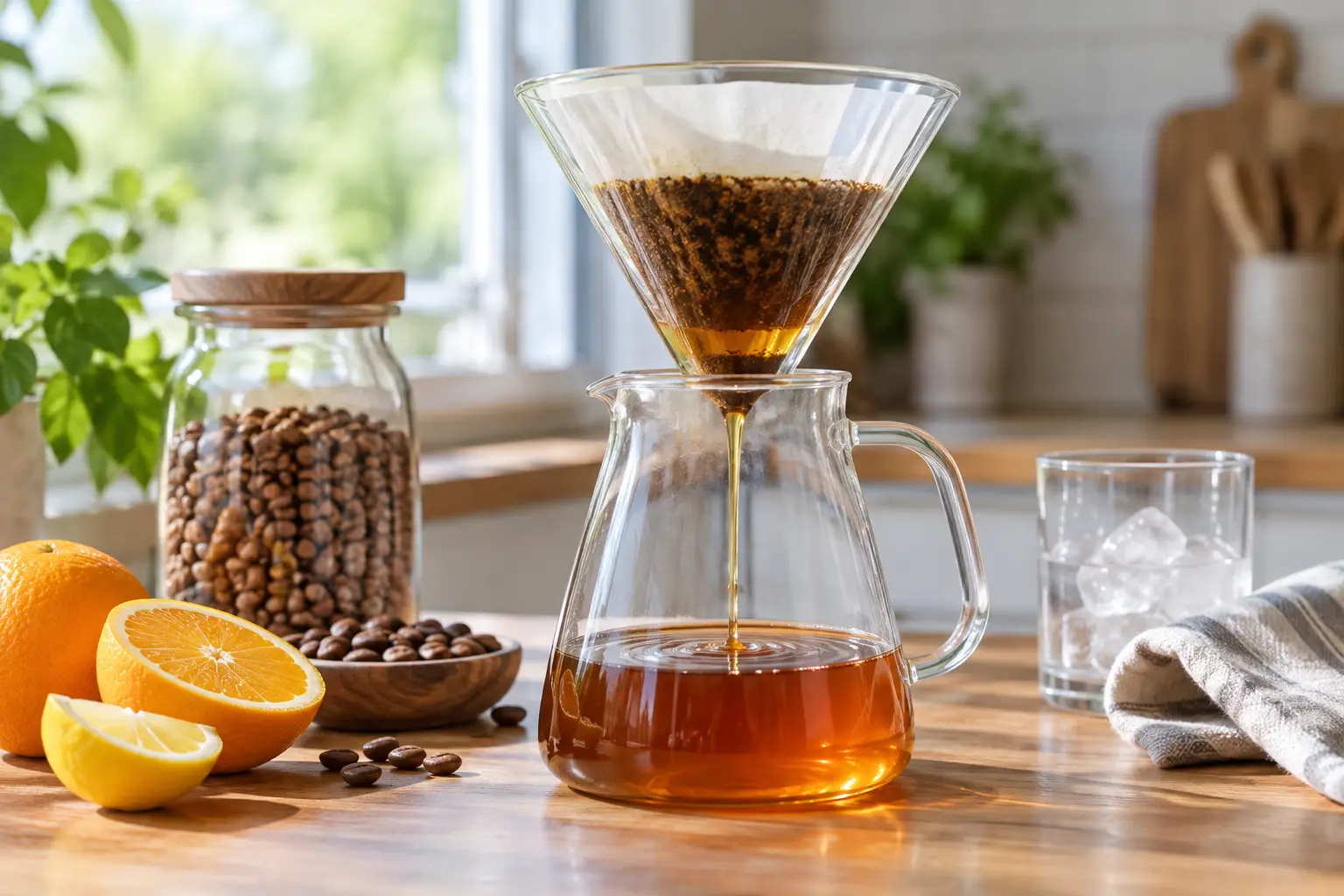
Malic and citric acids occur naturally in high-altitude coffee and contribute its fruit flavors. Too little extraction leaves the cup sour and grassy. Too much draws out tannins, compounds that leave a dry feeling in your mouth. We roast coffee from Huila, Colombia, in small batches to keep those bright notes without harsh bitterness.
Managing Bean Density and Soluble Yield
Dense beans release soluble compounds, the parts that dissolve into water, more slowly during a cold steep. According to the Specialty Coffee Association, cold water extracts these compounds much more slowly than hot water. Match your grind size to your steep time or the coffee can come out weak and watery.
Practical check: Keep your steep below 40 degrees Fahrenheit in the refrigerator to help protect delicate floral notes from oxidation.
The Step-by-Step Immersion Blueprint
Use a fixed coffee-to-water ratio and track how long the grounds stay wet. Your choice between whole beans and ground coffee depends partly on your grinder. It needs to produce an even coarse grind without too many fines, the powdery particles that slip through mesh.
Video: Cold Brew Coffee: What Level of Roast? (JayArr Coffee)
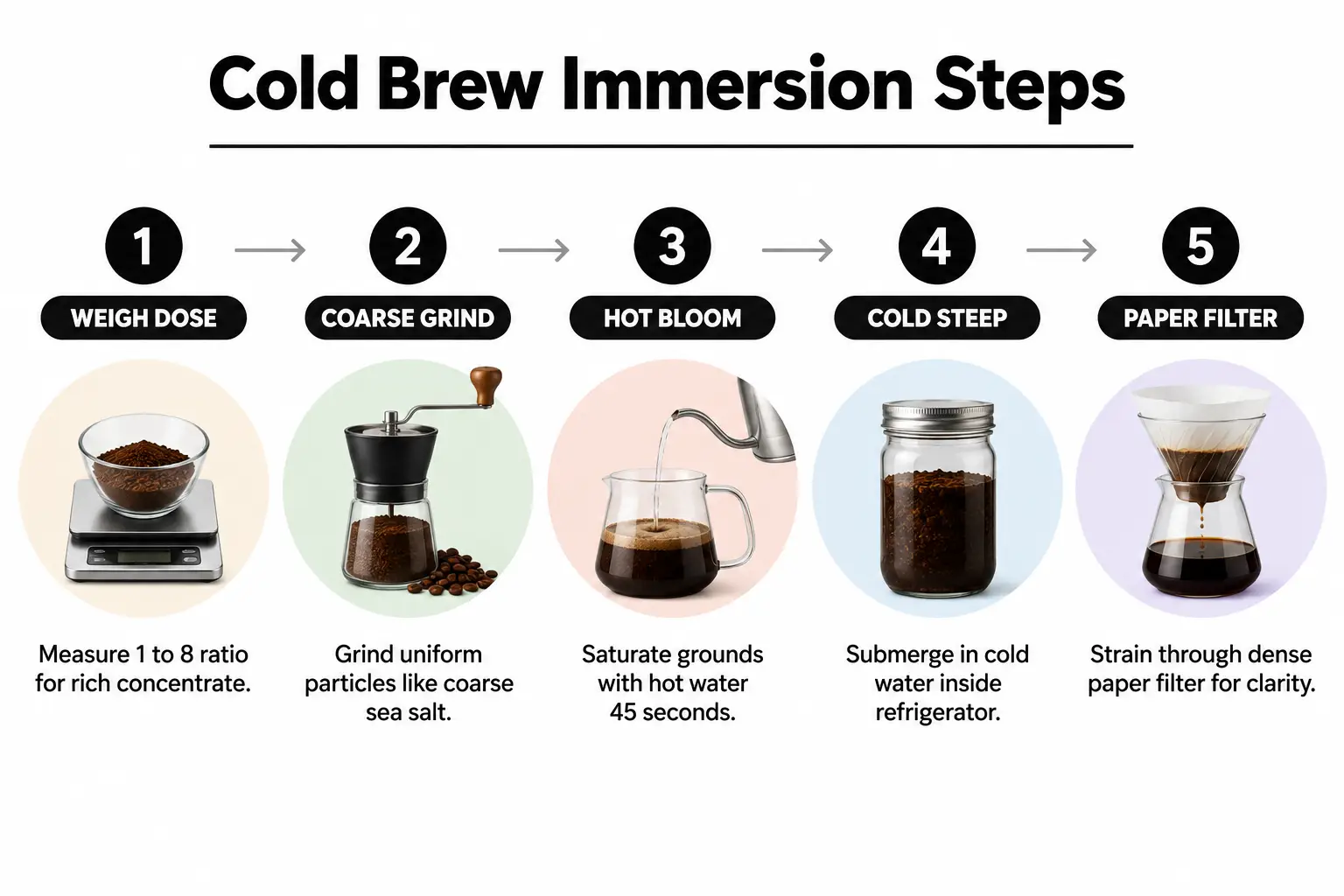
- Weigh your dose: Use a digital scale to measure one part coffee to eight parts water for concentrate. For ready-to-drink coffee, use 1:14.
- Grind to coarse sea salt: Aim for even pieces so water can reach the coffee without fine powder clogging your filter.
- Start with a hot bloom: Wet the grounds with water at 200 degrees Fahrenheit for 45 seconds. This releases trapped aromas before you add chilled water.
- Add cold filtered water: Pour in the remaining water cold, seal the container tightly, and put it straight in the refrigerator.
- Filter through paper: Pour through coarse stainless mesh first, then a dense paper filter to catch the smallest particles.
Selecting Whole Bean Over Ground
Freshly ground light roast starts losing aroma within minutes. Whole beans let you set the grind size yourself, rather than work with what's in the bag. Keeping fine powder to a minimum also helps prevent bitter sludge from collecting at the bottom of your carafe.
Grind Profiles and Filtration Gear Choices
Your brewing container and filter affect how clearly you taste the fruit. Light roasts need cleaner filtration than a traditional cold brew if you want their citrus notes to stand out.
Mason Jar with Paper Disk
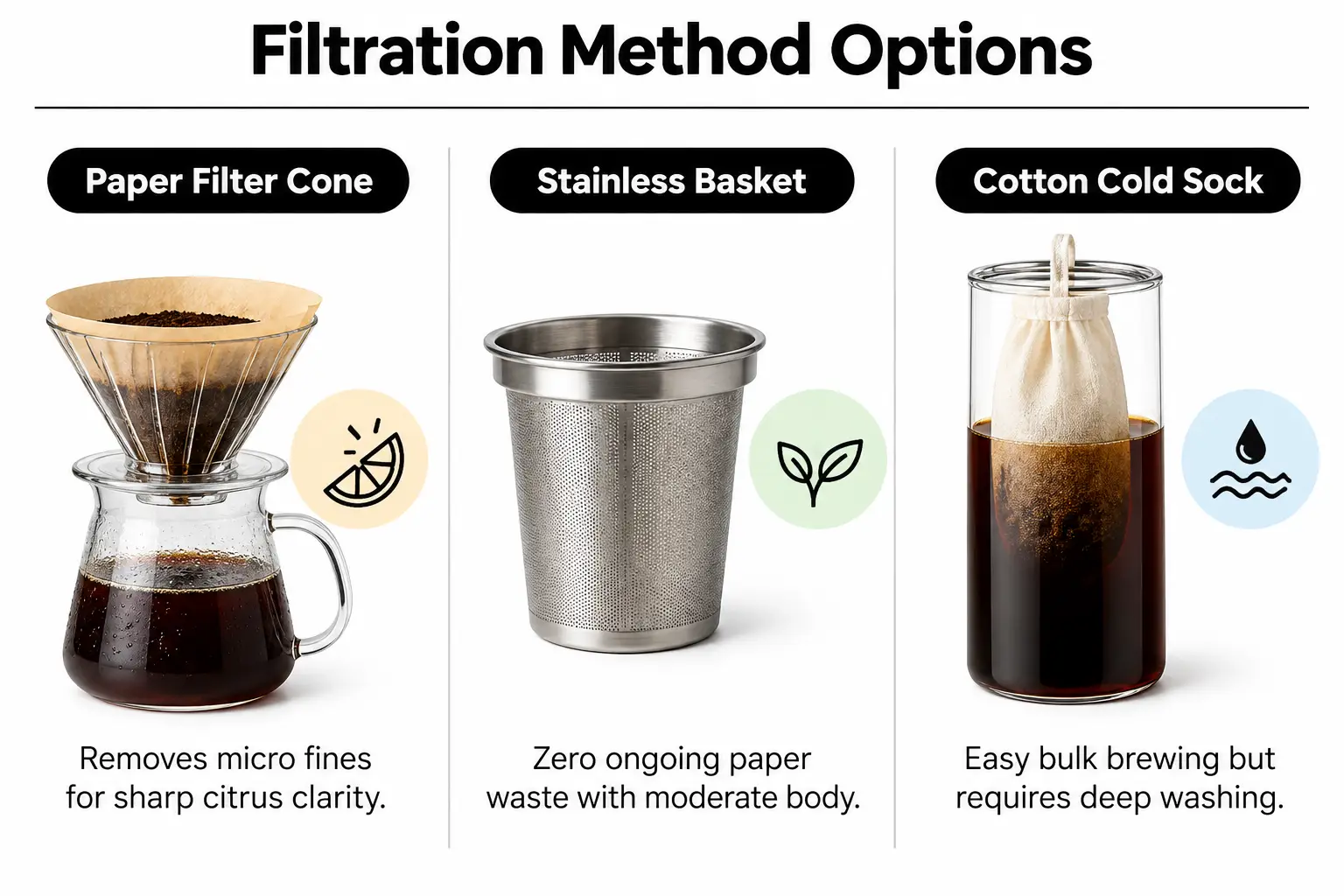
A glass jar and a paper pour-over cone give the cup the cleanest feel. Paper catches oils and tiny grounds that can dull the coffee's tangy sweetness. This is an inexpensive setup for a Staten Island kitchen, with no dedicated cold brew pitcher needed.
Mesh Basket Cold Brew Brewers
Dedicated cold brew pitchers have built-in stainless mesh baskets. They're convenient, but some fine grounds pass through, adding body while softening the citrus notes. Drinkers who prefer smoother roasts often use a second filter to remove the sediment mesh leaves behind.
| Option | Best For | Watch Out For |
|---|---|---|
| Paper filter cone | Clear citrus acidity with little sediment | Slow dripping as you filter the batch |
| Fine stainless mesh basket | Everyday use without disposable paper | Fine silt that softens fruit notes |
| Cotton cold brew sock | Large batches and quick cleanup | Fabric retaining stale coffee oils |
Water Chemistry and Temperature Thresholds
Minerals in your tap water affect a cold steep. Staten Island's municipal water has varying levels of dissolved solids, which can dull delicate citrus acidity if you brew without filtering it.
Water Mineral Balance
Bicarbonates, minerals found in tap water, can neutralize the coffee's natural citric acids before you taste them. Pay attention to the water as well as the beans:
- Use carbon-filtered water to remove chemical off-flavors such as chlorine.
- Aim for 120 to 150 parts per million of total dissolved solids, a measure of minerals in water.
- Avoid distilled water, which lacks magnesium to help extract fruity compounds.
The Room Temperature Trap
Brewing on the counter shortens the steep, but it also speeds up oxidation. A refrigerator at 38 degrees Fahrenheit helps preserve citrus esters, the compounds behind those aromas, for up to two weeks. Our guide to choosing specialty coffee roasters covers ethical sourcing if you're comparing beans.
Filtration rule: Pass the brew through a stainless strainer, then a damp paper filter to catch the fine grounds that make it cloudy.
Cold Brew Timeline and Extraction Stages
Dark beans allow more room for error in steep time than light beans. Plan the batch around your day so you can remove the grounds while the fruit still tastes bright, rather than leaving them overnight again.
| Phase | What Happens | Who Handles It | Typical Timing |
|---|---|---|---|
| Dose & grind | Weigh beans and grind them coarsely | Home brewer | 5 minutes |
| Hot bloom | Gas escapes as fruity aromas are released | Home brewer | 45 seconds |
| Chilled immersion | Sugars and acids slowly dissolve in the fridge | Fridge time, no hands-on work | 16 to 18 hours |
| Clarification | Paper catches fine grounds that add bitterness | Home brewer | 10 minutes |
| Chilled storage | Aromas settle in a sealed glass container | Fridge time, no hands-on work | Up to 14 days |
For more on extraction, read our comparison of Starbucks and craft roasters. Our article on brewing less bitter coffee in East Los Angeles also looks at how batch roasts perform in different regions. If you're unsure about a grind setting, ask our team for help.
Citrus Cold Brew Common Questions
Why does my light roast cold brew taste sour instead of citrusy?
Sourness points to under-extraction: the water hasn't drawn enough flavor from the grounds. Your grind may be too coarse, or you may have stopped the steep too soon. Try two more hours of steeping or a slightly finer grind to bring out sweetness that balances the acidity.
Can I make citrus cold brew without hot blooming?
Yes, though skipping that step can leave the coffee less aromatic and flatter in flavor. The 45-second hot pour releases trapped carbon dioxide, helping cold water reach and dissolve the compounds behind the fruit notes.
How long does citrus cold brew stay fresh in the fridge?
Expect the brightest citrus notes for about seven to ten days when you store the brew in airtight glass. After ten days, oxidation mutes those fruit flavors and can bring on a stale, cardboard-like taste.
Is light roast cold brew higher in caffeine than dark roast?
Research published by the National Institutes of Health reports that denser light roast beans retain slightly more caffeine by weight than dark roasts. An 18-hour cold steep produces a cup with a sustained caffeine lift.
Fresh Whole Beans for Staten Island Brewers
At Teddy Outdoors, we make Colombian coffee for mornings that lead outside. We roast for distinct fruit flavors without bitterness, so you can taste those notes in a chilled glass as well as a hot cup.
For your next home batch or a thermos headed to the Staten Island Greenbelt, ask us about whole beans that suit your brewing setup.
